Culture ·
Who gets to change a tradition?
A Mexican craft exhibition in Doha begins with makers adapting inherited knowledge. It offers a better question than asking whether a beautiful object looks sufficiently traditional.
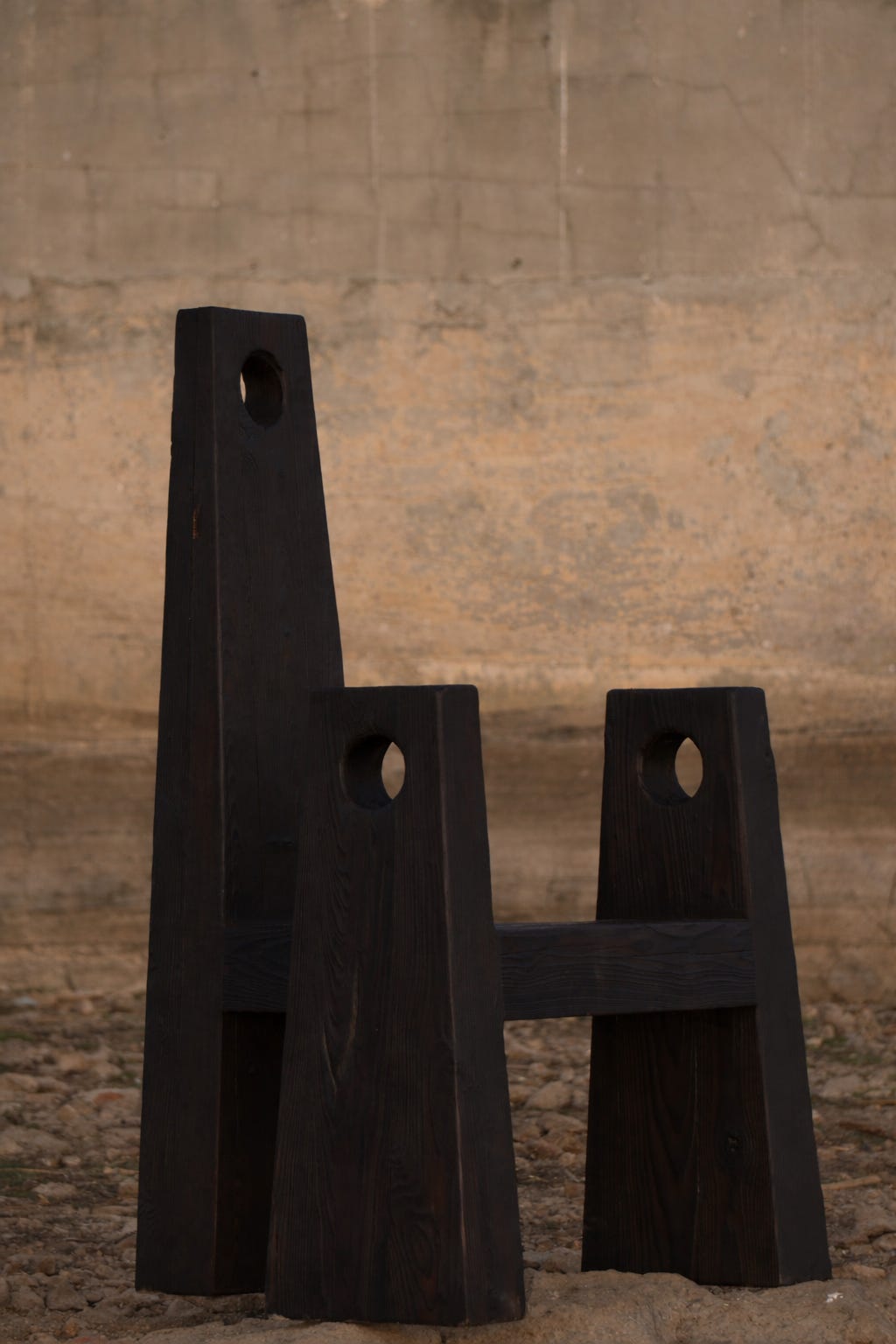
A chair can make the word tradition feel unexpectedly active. The published image of Isaac Castañeda Pérez’s La silla del Sol, dated 2026, gives a particular object and a named maker to a conversation that too often settles for admiring an anonymous pair of hands. The accompanying account identifies pine and a carbonizing treatment. A material has been worked through a decision, rather than simply preserved as a familiar appearance.
The chair appears in coverage of Expanded Tradition: Contemporary Craft Practices in Mexico, presented at M7 in Doha. The exhibition’s announced run is October 27 through December 26, 2026. This is a reading of published documentation and the exhibition’s stated proposition, rather than an account of having visited its galleries.
That proposition is worth taking seriously now. A tradition can continue through a person making a new decision from within it. The alternative is to treat its appearance as something that everybody may admire but nobody is allowed to alter.
Begin with somebody’s decision
The useful thing about a named object is that it places a limit on the vagueness. Instead of saying that craft carries memory, we can ask what this maker has done with a material and which part of the result makes us curious. A chair also retains the possibility of use. Its image can invite questions about structure, touch and the way a person might encounter it.
The photograph alone cannot answer all of those questions. It does not establish comfort, durability or a complete account of the technique. That limit gives the documentation a further job: identify the materials, describe the process and make the maker’s choices easier to follow.
In its October 6 announcement, Qatar News Agency describes the exhibition’s emphasis on artisanal processes and on people reinterpreting inherited techniques, materials and forms. It names Ana Elena Mallet as curator and LANZA Atelier for exhibition design and museography. The framing makes change part of continuity, rather than treating contemporary intervention as evidence that an object has lost its cultural place.
That is a curatorial argument, not a single definition that every maker must adopt. Its value is the kind of attention it asks a viewer to bring into the encounter.
Inheritance includes experiments
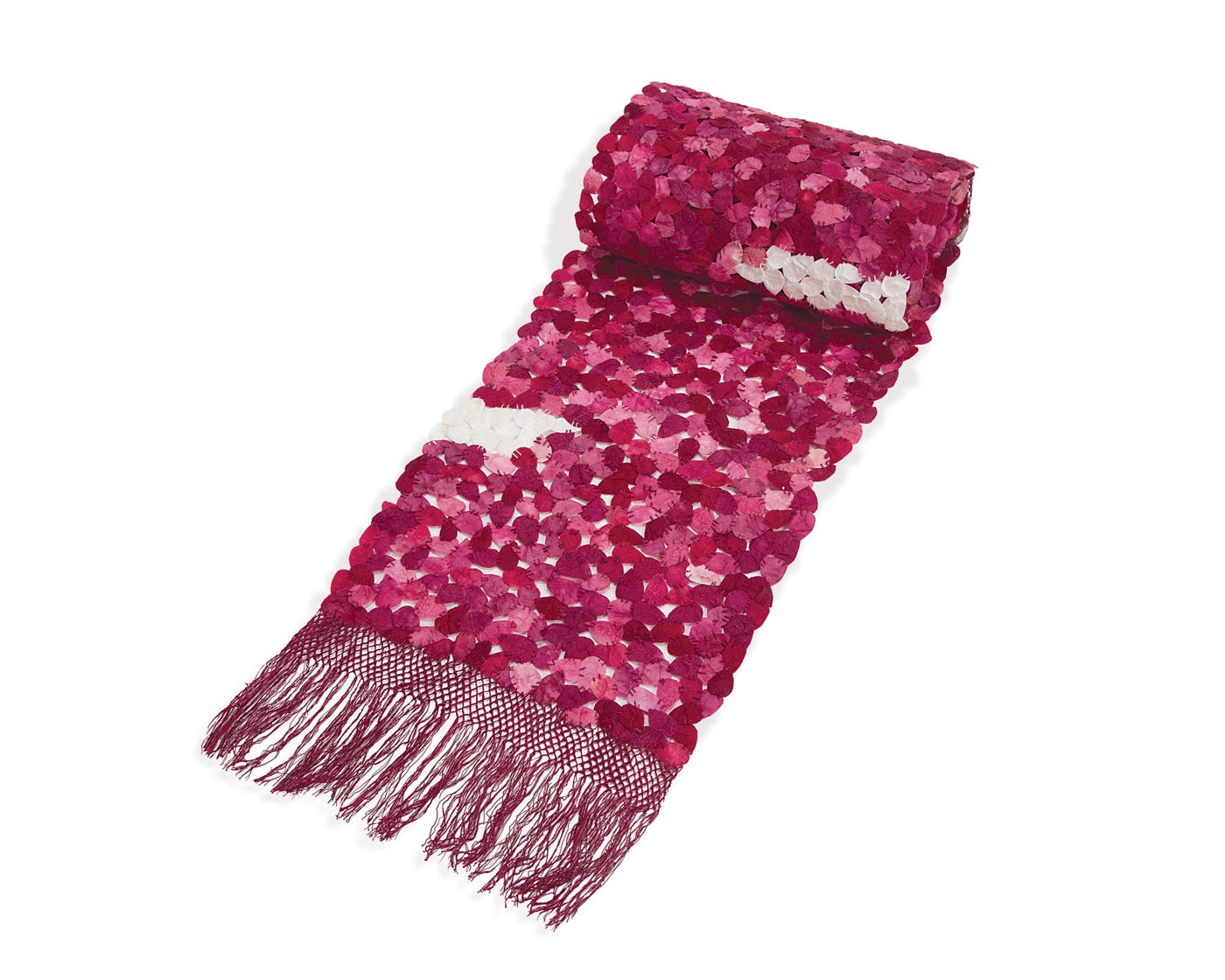
The named participants offer ways to make that argument particular. Friends of Oaxacan Art’s profile of Esperanza Martínez Velasco describes her experimenting with cocoons as a teenager, including flowers and jewellery. It also documents a later textile using cut cocoons, dyed and attached with silk thread. Those earlier records are context for her practice, rather than a claim that the same piece is installed at M7.
A material associated with one familiar use can carry another idea. The inherited knowledge remains important precisely because somebody understands it well enough to try something else. The profile gives the transformation an author and a sequence, making experimentation easier to see than the broad word heritage.
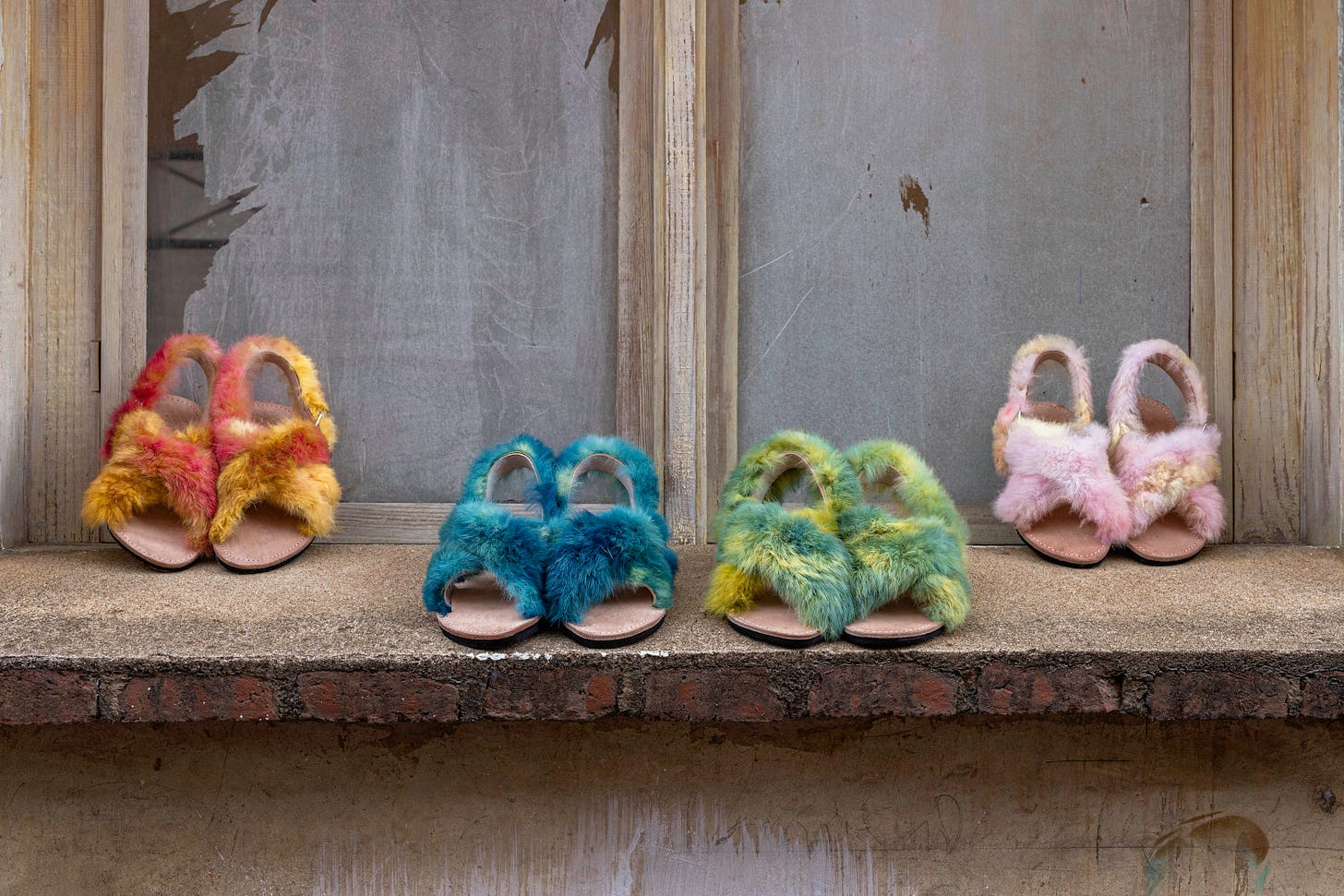
The Mexican culture ministry’s ORIGINAL directory similarly identifies Ever Jesús Arellanes Luna’s Baku Artesanal practice in footwear, and publishes photographs of its work. Those archival images place specific shoes and material decisions beside a name. They are not photographs of the Doha installation or proof that a pictured pair is the exhibition loan. Keeping those records distinct lets the current show open a path into a maker’s wider practice without rewriting its history.
Preservation can become an instruction
There is a generous impulse behind wanting a tradition to survive. Techniques can become difficult to sustain, and knowledge can be lost when the circumstances that support its transmission disappear. But the wish to preserve can also become an expectation that living makers reproduce an image of the past for the comfort of everyone watching.
The distinction appears when an audience accepts the technique while becoming uncomfortable with the maker’s freedom to change its purpose or appearance. An inherited method is treated as authentic so long as the resulting object looks familiar. Innovation is welcomed elsewhere, then viewed suspiciously when the person practising a tradition claims it for themselves.
These are questions to carry into the exhibition’s proposition, rather than claims about the experience of every participant. Whose expectation is being satisfied when an object must remain recognizable? Can a maker alter scale, form or use without being asked to explain why the work still belongs? What would count as continuity if the surface no longer supplied the easiest clue?
Naming the person helps keep the questions grounded. A maker can have preferences, experiments and disagreements. An anonymous symbol of heritage is given far fewer possibilities.
The display is part of the interpretation
An exhibition can help a viewer see process by making its stages and relationships legible. It can also turn process into another beautiful surface. The difference depends on what the documentation lets us understand, not simply on whether tools or unfinished work appear nearby.
A useful display might explain a particular transformation, identify a collaborator or connect a finished form with a choice made during production. Those possibilities should not be mistaken for a report of every gallery arrangement at M7. They are standards against which to read the exhibition’s stated emphasis and the material it makes public.
The curator’s October 28 programme places authorship and inherited knowledge at the centre of the discussion. It offers a timely route into the argument while leaving the individual works deserving of their own accounts. A programme can set the terms of a conversation; the objects need to make those terms particular.
That is why La silla del Sol is a useful beginning. It gives the reader somewhere to return after the larger words. A chair, a material and a maker can hold a question more precisely than a general assurance that craft remains relevant.
Credit and power need different evidence
Greater visibility for makers is meaningful. It should make it easier to find their work, understand their contributions and retain their names when images circulate. It does not, by itself, establish how compensation, ownership or control are shared within an exhibition or the wider market around it.
An audience can appreciate the curatorial proposition while keeping those questions distinct. A respectful caption is worth having. So are the arrangements that allow a person to continue practising, teaching and making choices. One kind of evidence should not quietly substitute for the other.
The same care applies to environmental language. An inherited technique is not automatically a complete sustainability assessment. A specific treatment, material or scale of production deserves to be described on its own terms. Taking craft seriously means giving its achievements and limitations the same precision we would ask of any contemporary design.
The question worth leaving with is therefore more generous than whether a new object looks traditional enough. What has its maker carried forward, and what have they chosen to change? A living tradition needs room for both answers. The person doing the work should be allowed to appear in the story as an author of its next form.