Fashion ·
Prada wants you to notice who drew the mice
The Holiday 2026 campaign makes its own production part of the attraction. The interesting question is what that attention gives back to the people behind the image.
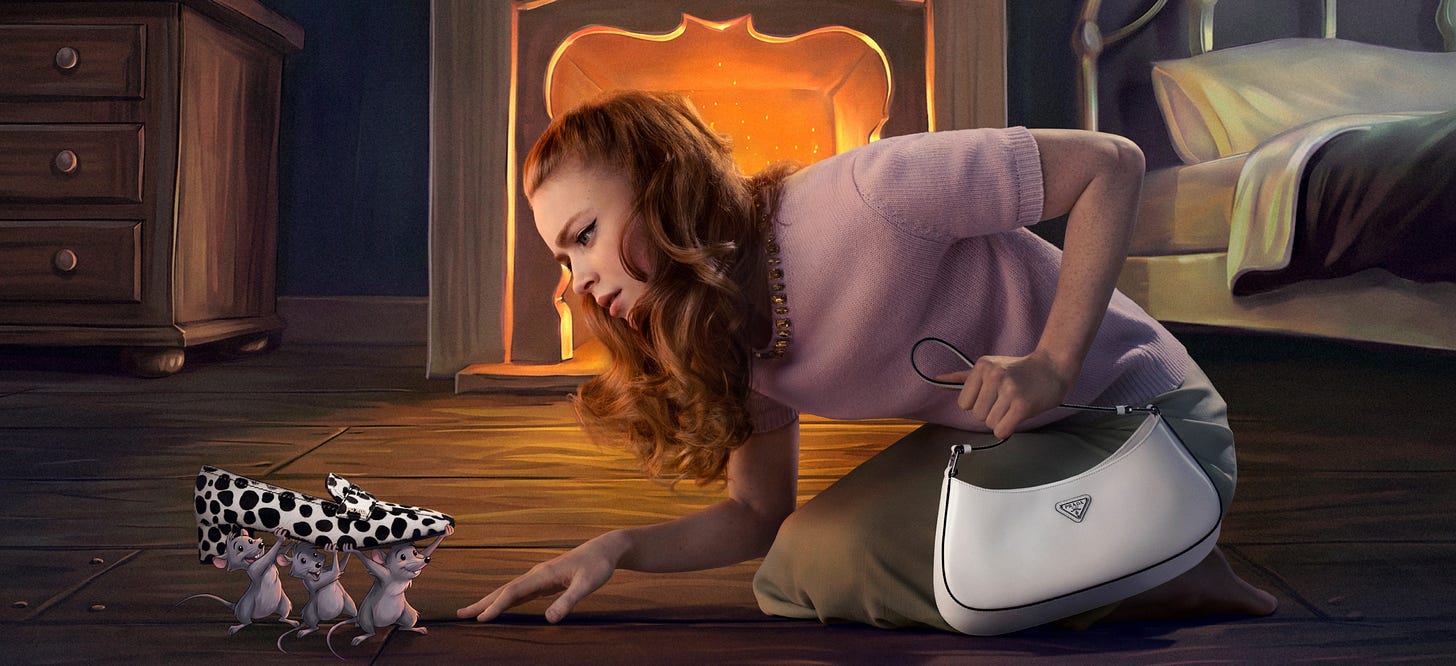
The mice have a problem of scale. The shoe they want to carry is rather large for their purposes, which makes an ordinary product photograph into a small comedy. Sadie Sink belongs to the photographed world. The mice belong to a drawn one. The pleasure comes from allowing the two to meet without pretending that they were made in the same way.
That visible difference is the most interesting thing about Drawing Prada: Animated by Hand, the house’s Holiday 2026 campaign. The drawing does more than decorate a seasonal collection. It gives the image a second subject: the decisions and people required to make a fantasy feel worth entering.
Prada credits John Pomeroy with animation direction and Glen Luchford with photography and direction. Its account explains that the photographic lighting and perspective were arranged in relation to the illustrations. There is a practical achievement beneath the charm. A photographed figure and a drawn creature need some shared understanding of space before their encounter can become convincing.
The photograph has to make room for the drawing
A drawing can preserve the evidence that somebody chose a line. Photography supplies a different kind of presence: a person, an item of clothing, a shoe that occupies a particular amount of space. Put the two together carelessly and the photograph can make the illustration feel pasted on. Make their viewpoints cooperate and the difference becomes something to enjoy.
That is a useful way to look at the campaign’s winter scenes. Rather than asking only whether they resemble an old animated film, follow the relationship between the photographed subject and the illustrated setting. Where does the person seem to stand? What makes an animal’s attention appear directed at the product? Which part of the joke depends on relative size?
These are questions about composition, timing and performance. They give the work more specificity than the reassuring idea that something was made by hand. A hand is capable of many decisions. The interesting account identifies which decisions mattered.
The campaign’s credited roles also help separate those decisions. Pomeroy leads the artists creating the illustrated world; Luchford’s photography gives the actors a place within it. Prada names Miuccia Prada and Raf Simons as creative directors and Ferdinando Verderi for campaign creative direction. That is a starting map of responsibility, rather than a complete account of every contribution or working arrangement.
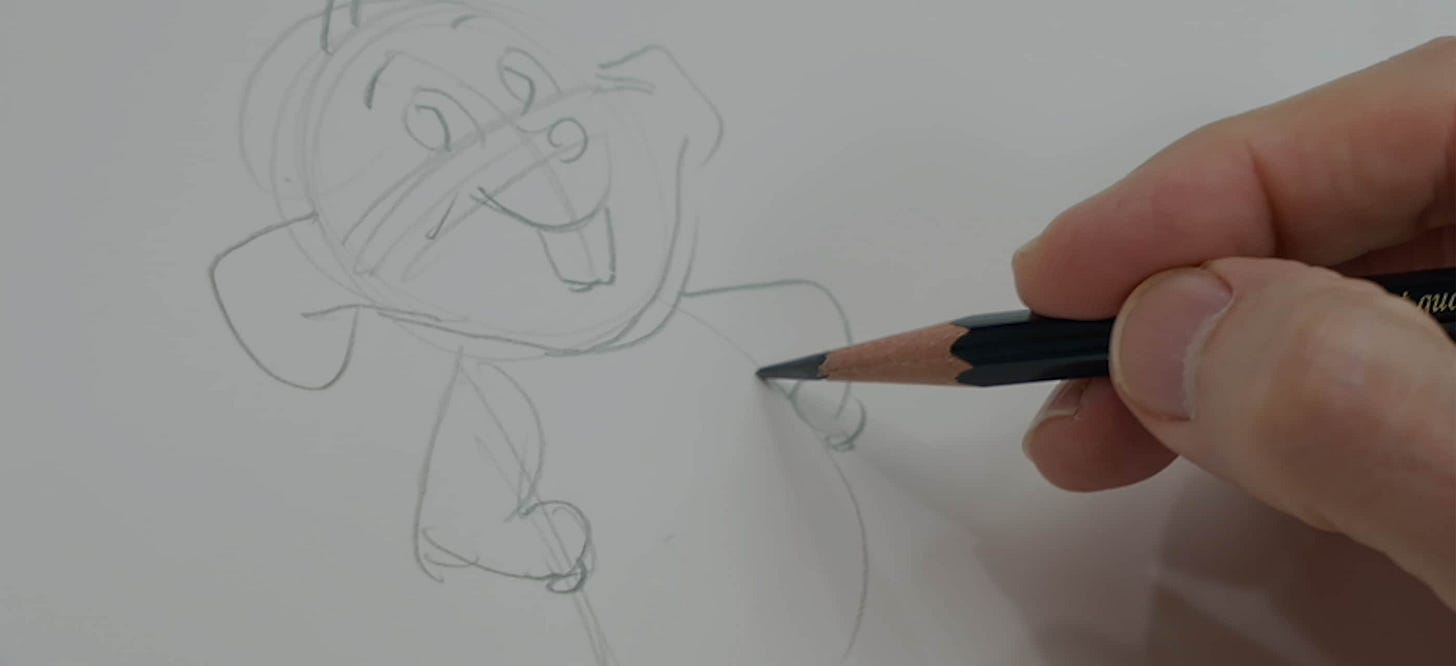
The making has become part of the message
“Animated by Hand” is a remarkably direct instruction for looking. Before a viewer has inspected a bag or considered a shoe, the campaign has asked them to value how the surrounding image came into being. The production method has acquired a place beside the product in the story.
There is nothing inherently contradictory about a luxury advertisement making that invitation. An advertisement can be commercially purposeful and still contain work worth examining. The useful test is whether its account of making teaches us something about the image, rather than merely asking for admiration on behalf of an unnamed maker.
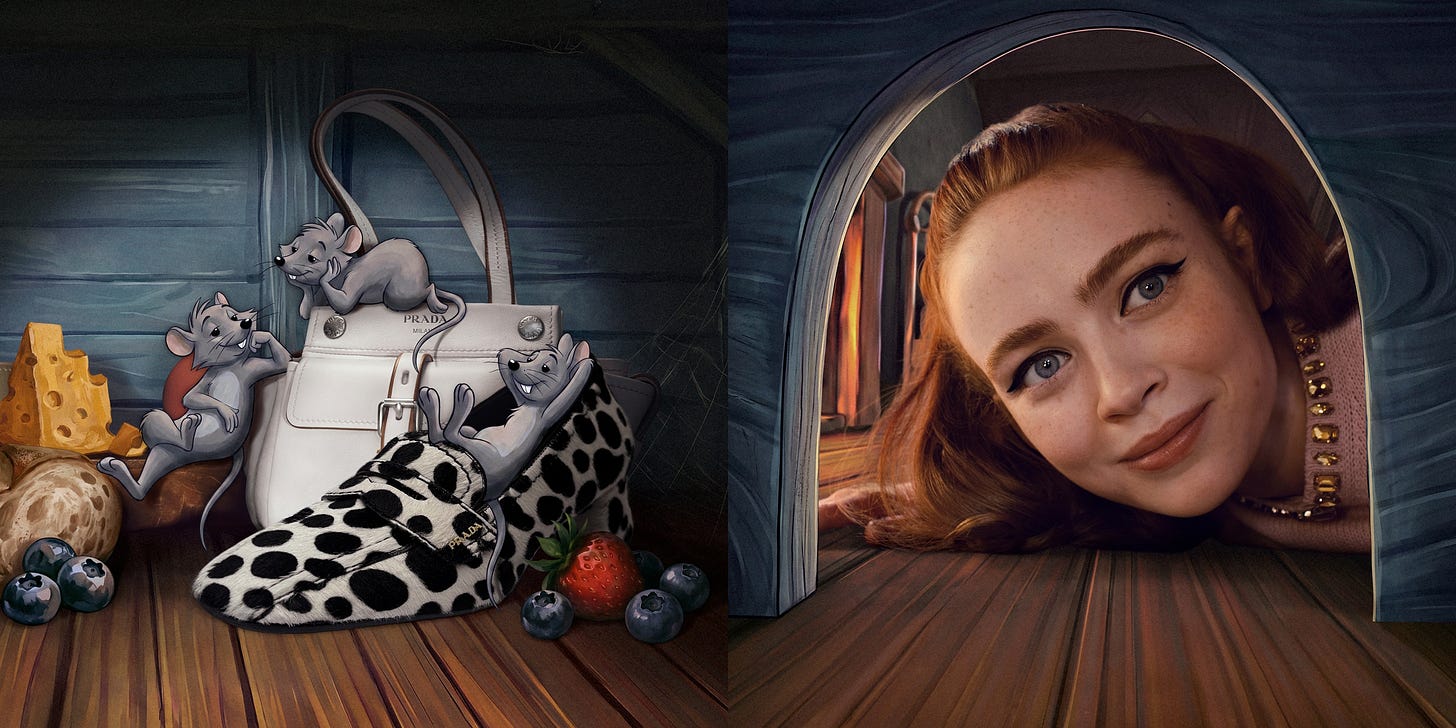
Here, the small encounter between mice, shoe and actor offers a way in. The joke depends on the coordination of different kinds of work. Explaining that coordination makes the image more particular. It also gives the viewer somewhere to direct their interest beyond the name on the product.
Recent coverage has often framed the campaign against the spread of generated imagery. That context helps explain some of the conversation around it, but the campaign does not need to prove that an entire industry has changed direction to deserve attention. Nor does a hand-drawn component establish the tools used in every other stage of production. The documented claim concerns the illustration and the way it meets the photography.
Credit should survive the campaign
The danger in celebrating a human touch is that the human can remain surprisingly indistinct. A hand becomes a useful visual symbol while the person’s particular knowledge disappears into a general atmosphere of care. The image receives a warmer story; the maker remains a mood.
Naming Pomeroy and describing his role improves on that arrangement. Following the production further would mean learning which artists shaped particular characters, how their work developed and where a viewer can encounter their other projects. Those questions are an invitation to continue the account, rather than a claim that the public campaign page supplies every answer.
There is a related distinction between celebrating a process and understanding its conditions. A making-of can reveal an artistic choice without establishing compensation, the distribution of creative control or the durability of employment. We do not need to turn a charming film into a complete labour investigation. We should avoid treating its charm as an answer to questions it has not examined.
The generous response is more specific attention. Keep the animation credit attached when the image circulates. Look at the drawings as decisions rather than as a comforting substitute for a discussion of technique. A campaign becomes culturally more useful when the curiosity it creates can travel toward the people who made it.
The shoe still has its own job
None of this establishes that the pictured products are better made, more durable or more desirable in use. The intelligence of an advertisement and the quality of an object are separate things to examine. A beautiful production story cannot inspect a seam for us.
It can change the quality of the encounter, however. The shoe enters a predicament instead of waiting passively to be admired. The photographed actor becomes a participant in a drawn world. The viewer is offered a small reason to stay with the image beyond recognizing the label.
That is TAC’s reading of what makes this campaign worth discussing now. The visible making contributes to the fantasy rather than interrupting it. Knowing how two unlike images were brought together gives the joke another layer and the craft a more intelligible place in the finished work.
Enjoy the mice. Then keep the names with them. The most convincing celebration of a human hand should make it easier to follow the person whose judgment gave that hand something interesting to do.