Rooms by Criterion · No. 4
Warm Restraint
The Organic Modern Home: How to Layer Natural Materials, Texture, and Patina Without Defaulting to Beige
A 50-page field guide to building warmth through material contrast, finish, age, touch, and use—not a beige shopping list.
One-time purchase · immediate private library access · secure PDF downloads
See inside the book ↓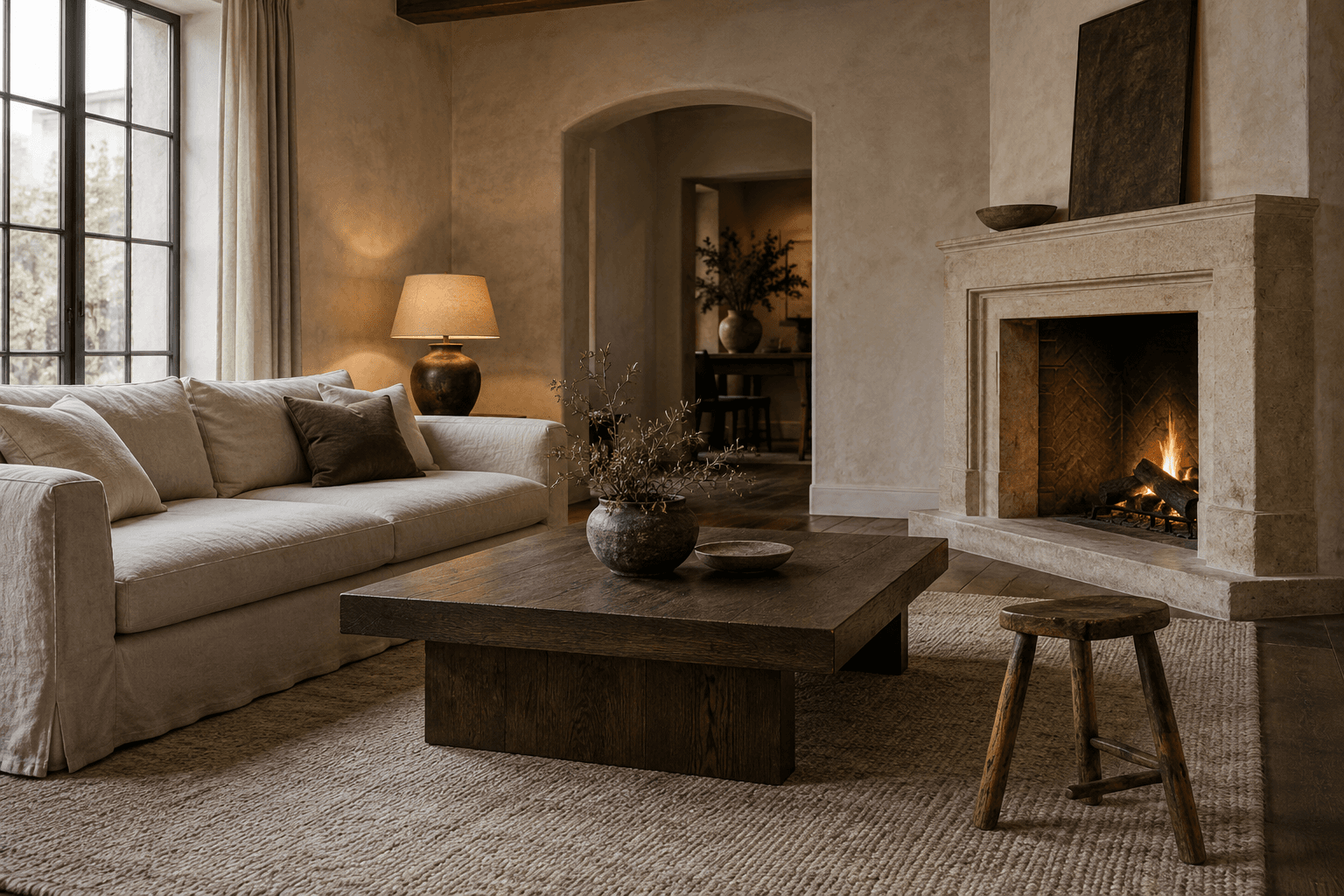
Selected pages · Founding edition
See material become a working language.
Fifty pages move from fixed surfaces through grain, temperature, reflectivity, textiles, wood, stone, plaster, metal, patina, salvage, and care.
- 50
- pages
- 08
- room studies
- 00
- diagrams
- 10
- worksheets
The proposition
Organic modern, beyond beige.
The edition replaces a trend palette with a relationship between grain, temperature, reflection, and age.
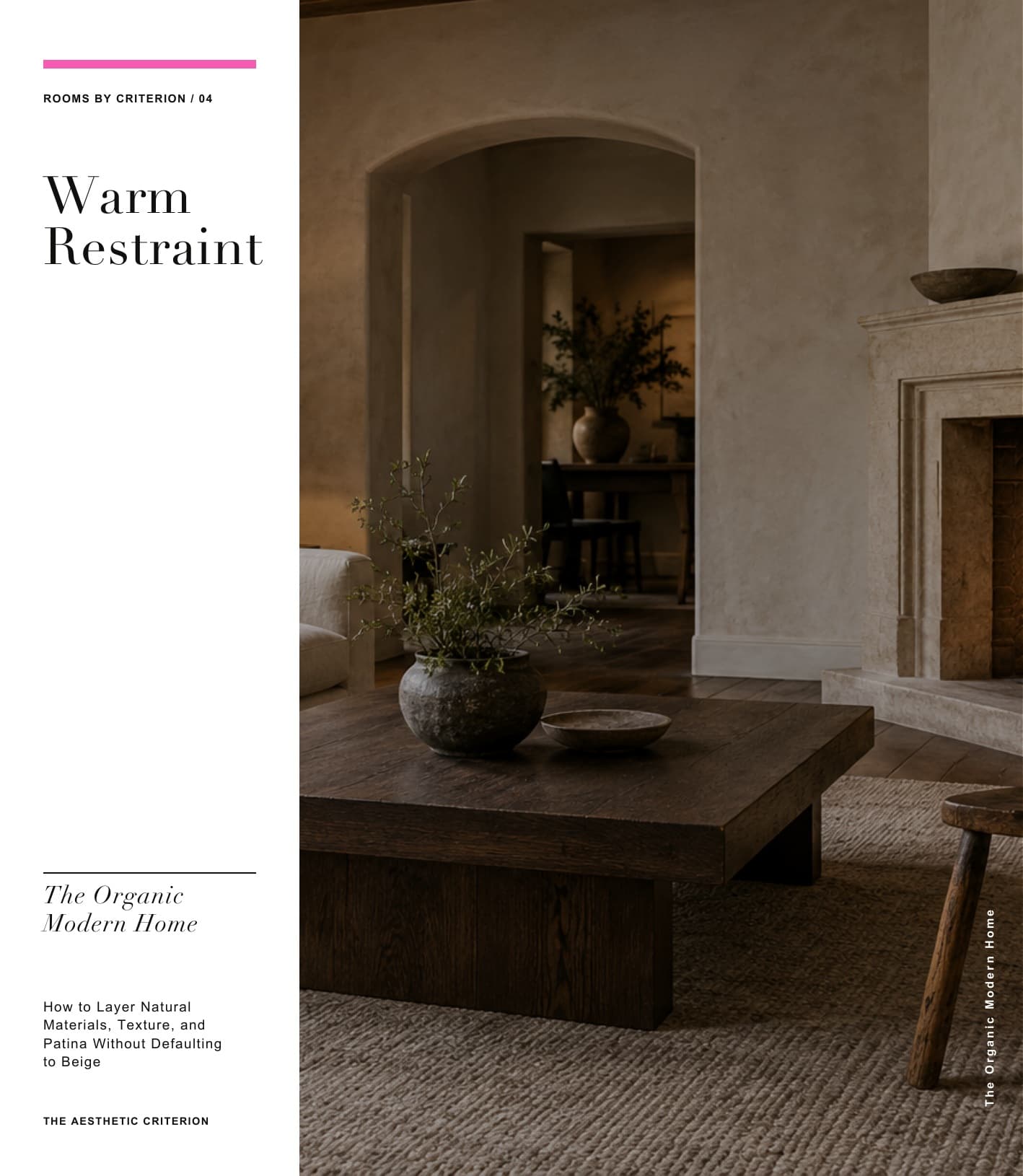
Look, then read
Tactile rooms become evidence.
Material studies are followed by methods that name why each relationship works.
Method into practice
Material choices become specifications.
Worksheets record condition, performance, finish, care, source, and the exact neighboring surface.
A complete system
The book ends in a material schedule.
Ten decisions consolidate into one room-by-room plan for sourcing and care.
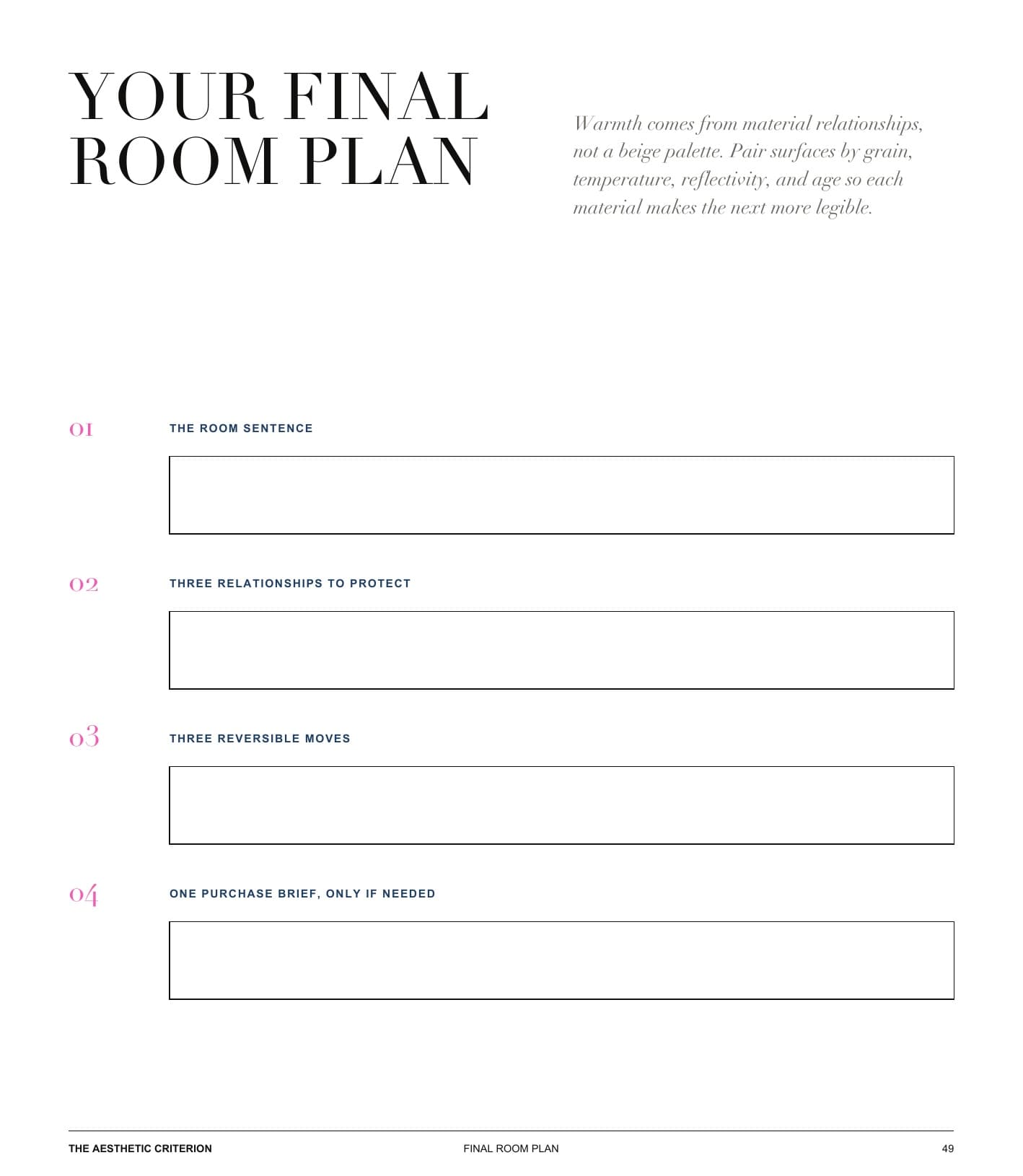
The complete founding edition includes the 50-page illustrated design book, ten integrated working pages, and a private web reading edition.
Buy the editionThe criterion
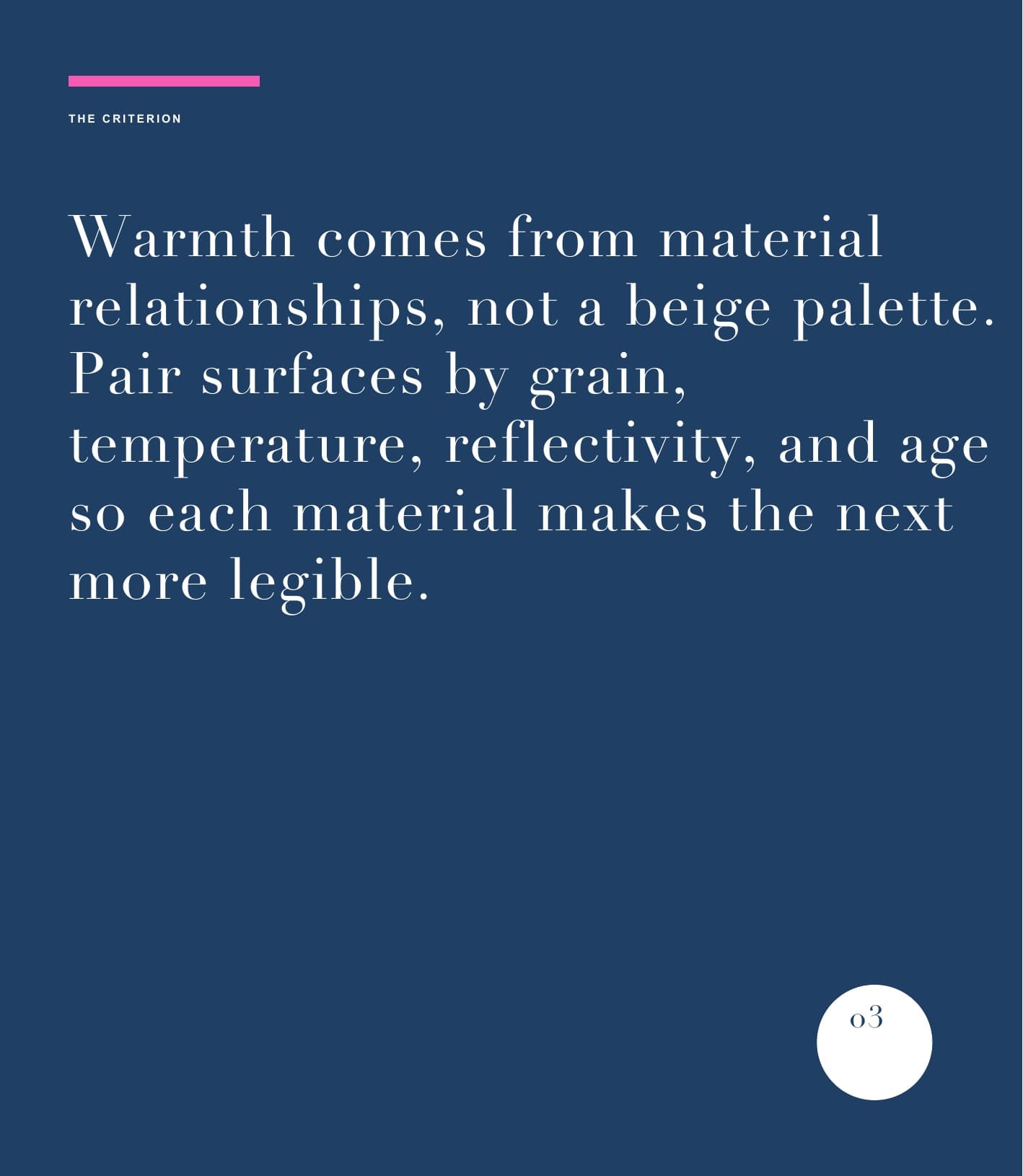
Warmth is a material relationship.
Warmth comes from material relationships, not a beige palette. Pair surfaces by grain, temperature, reflectivity, and age so each material makes the next more legible.
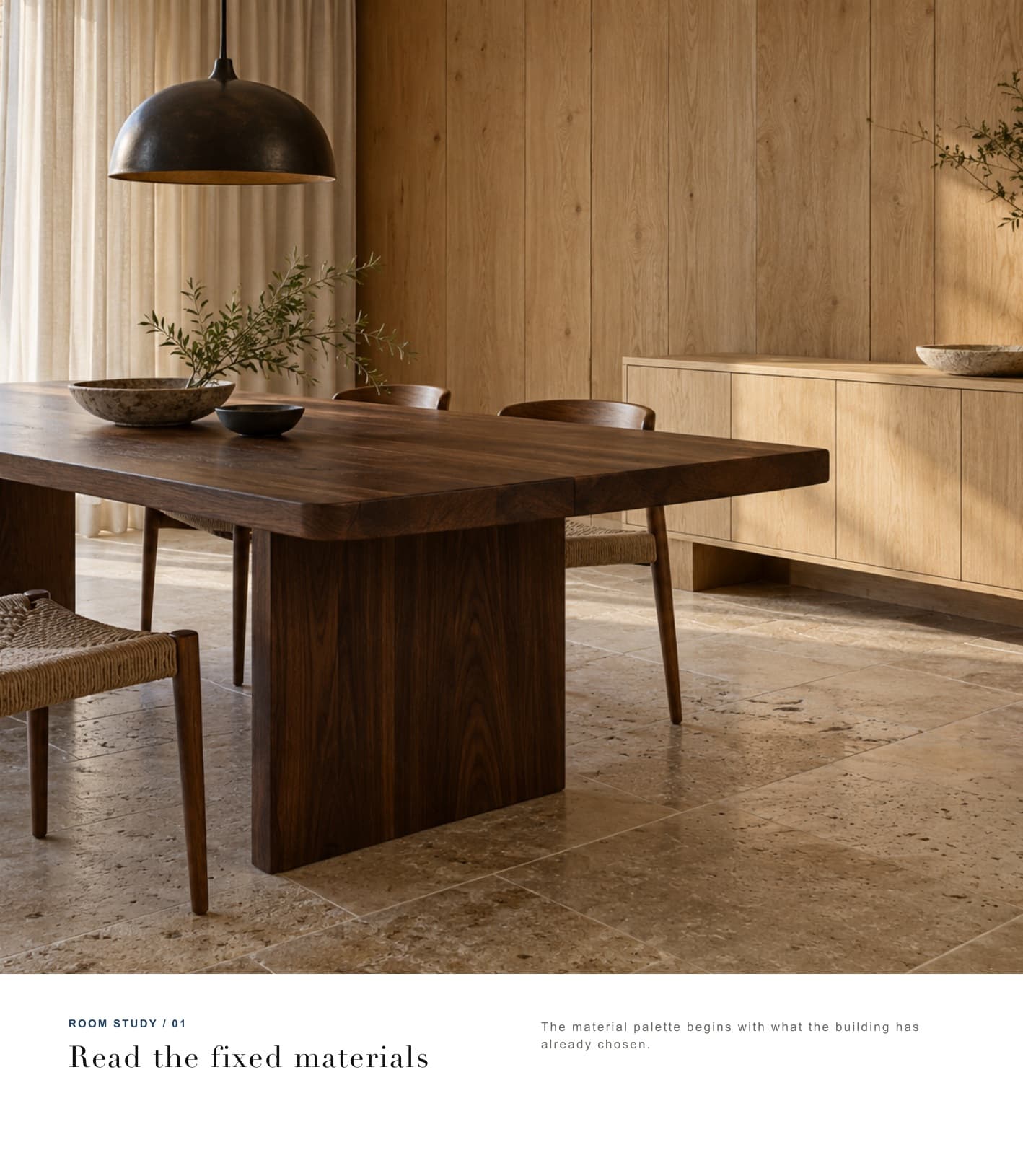
Two studies from the method
Grain · finish · patina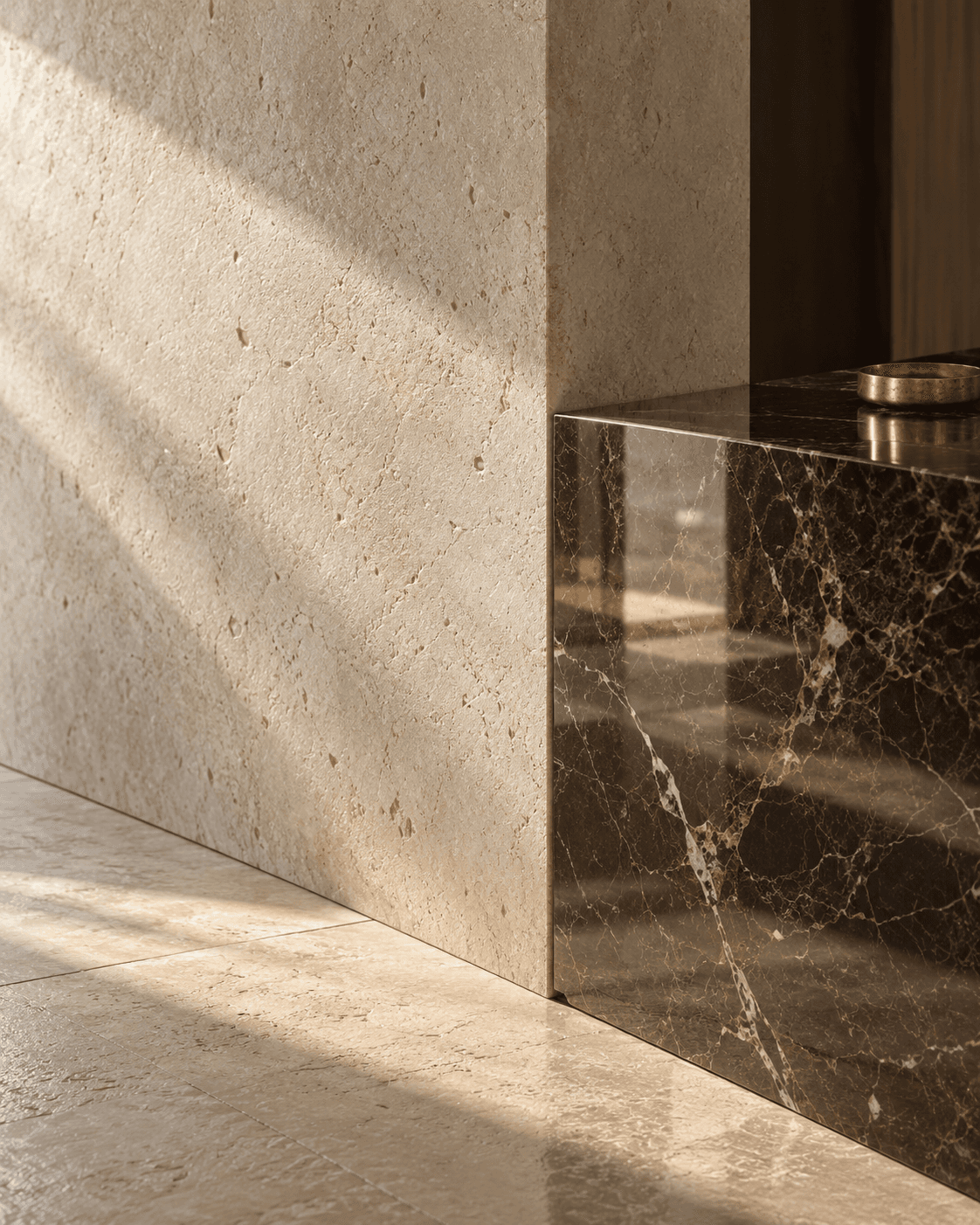
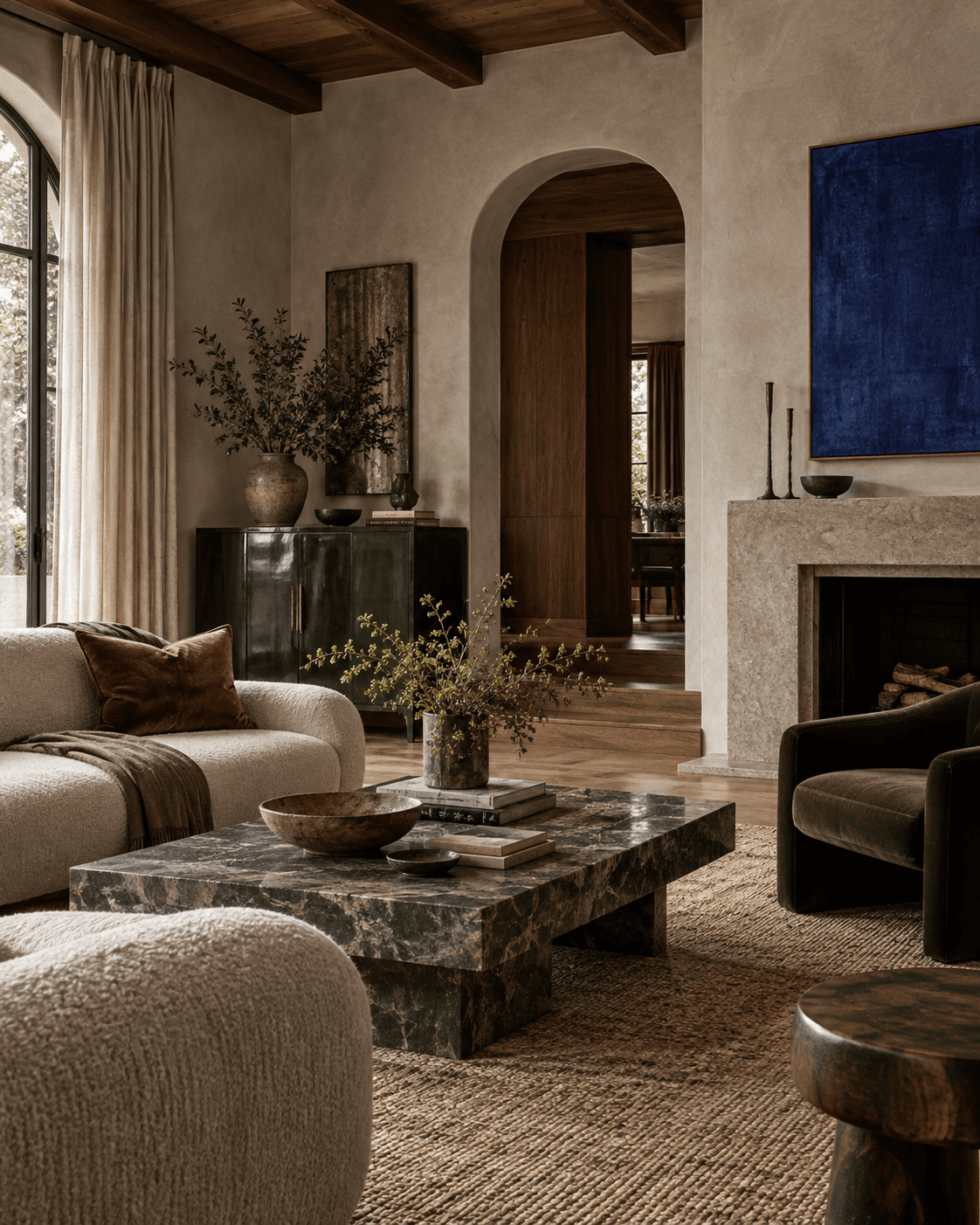
Inside the guide
Ten material decisions, in order- 01
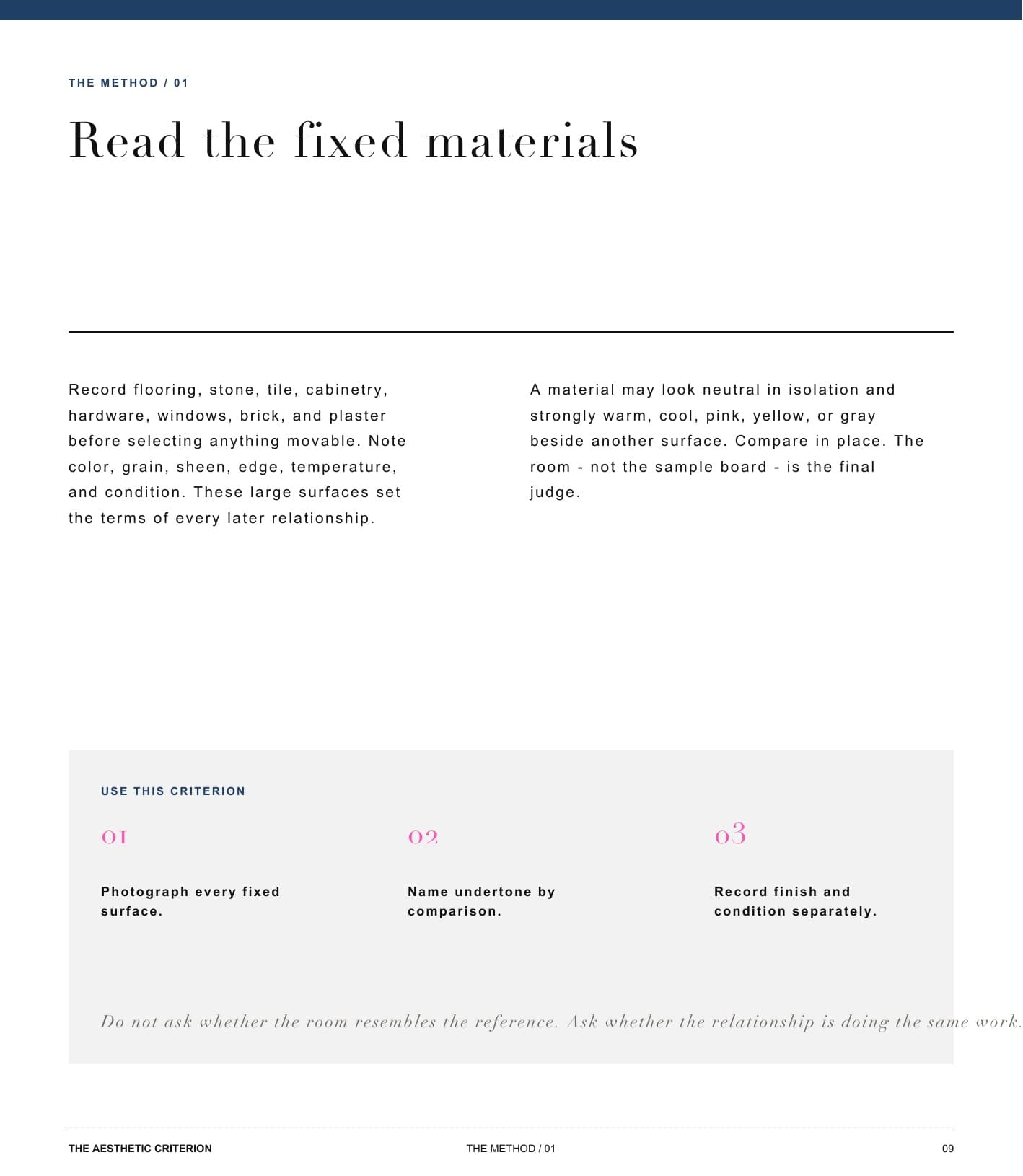
Read the fixed materials
Start with the large surfaces that already set the room’s terms.
- 02
Distinguish material from imitation
Judge edge, performance, repairability, and aging honestly.
- 03
Build material contrast
Compare grain, temperature, reflectivity, and age.
- 04
Layer textiles by hand and weight
Assign each fiber and weave a physical job.
- 05
Combine wood tones deliberately
Use undertone, grain, finish, distance, and bridge materials.
- 06
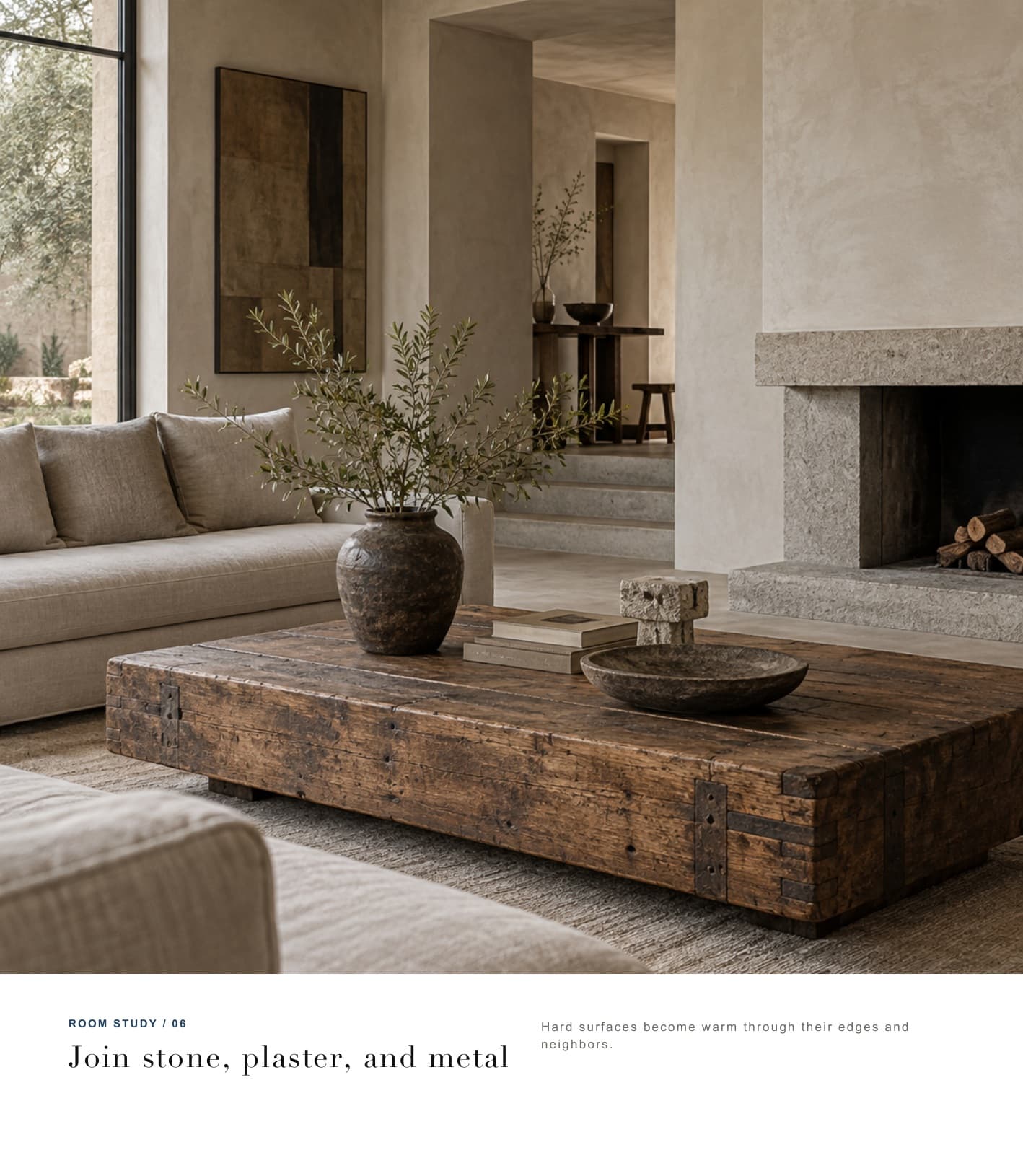
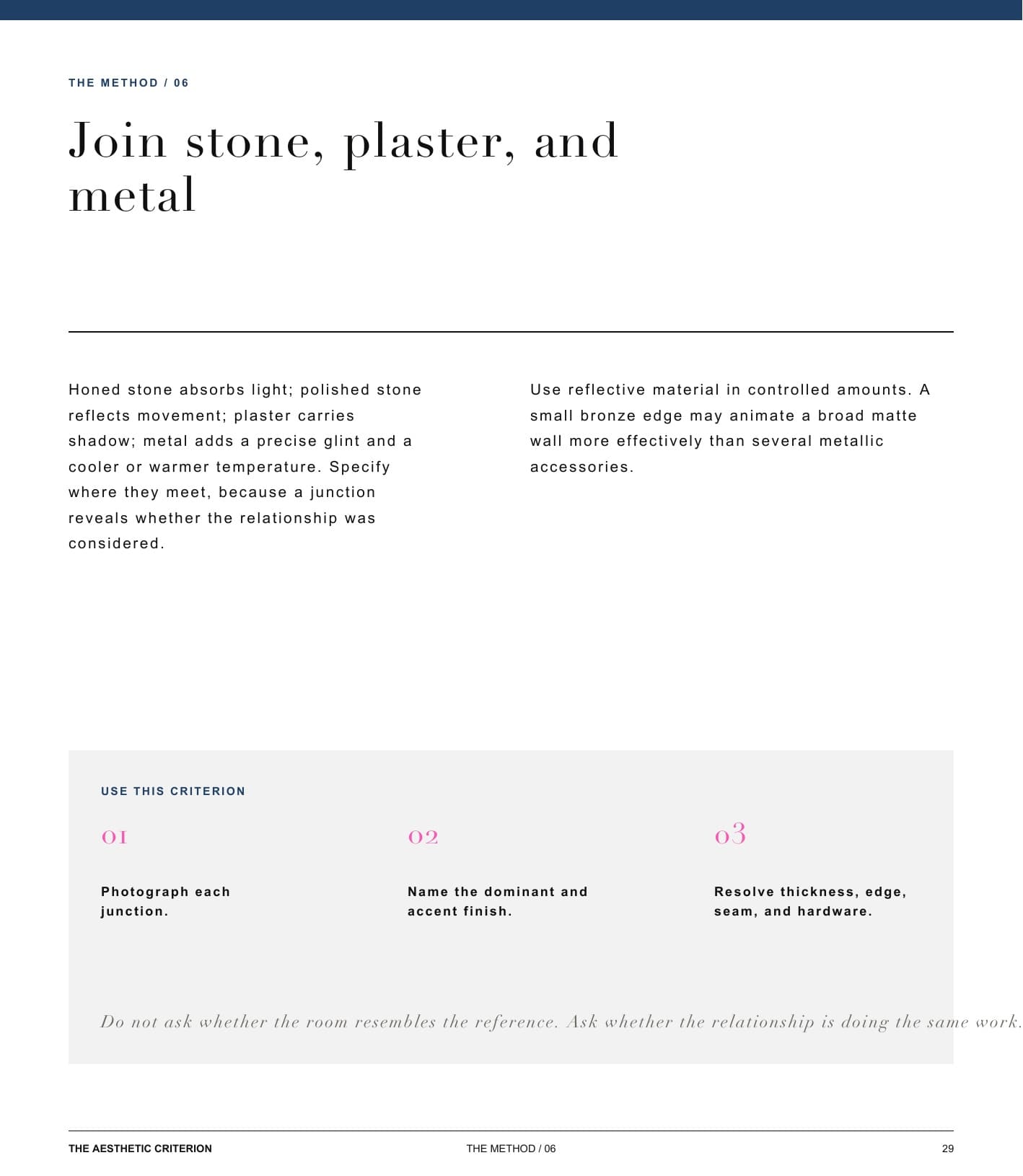
Join stone, plaster, and metal
Make edges, seams, thicknesses, and finish contrast intentional.
- 07
Read patina and condition
Separate meaningful age from unsafe or progressive failure.
- 08
Use salvage without nostalgia
Give reclaimed pieces a present-tense function.
- 09
Specify finish, care, and source
Test the complete assembly under real conditions.
- 10
Complete the material plan
Map dominant, support, interruption, source, and care by room.
Not a beige shopping list
Leave with a complete material schedule.
The guide begins with fixed surfaces, then tests every new material by performance, contrast, aging, care, and the way it meets its neighbor.
- Fixed-material inventory
- Material role map
- Contrast matrix
- Textile stack
- Wood-tone comparison
- Hard-surface junction sheet
- Patina checklist
- Salvage integration test
- Sample and care log
- Final material schedule
The complete edition
Three ways to use itIllustrated design-book pages
The full ten-chapter argument, 8 conceptual room studies, 0 original diagrams, practical examples, and source notes.
Integrated working pages
Printable tools taught inside the book, so each observation method leads directly to a decision in the reader’s own rooms.
Web reading edition
A responsive edition with chapter navigation and diagrams, held in the buyer’s TAC Library alongside the downloadable files.
A sample from the method
Begin with the materials the building already chose.
Record flooring, stone, tile, cabinetry, hardware, windows, brick, and plaster before selecting anything movable.
Honed beside polished, rough beside smooth, old beside precise: difference is what makes material visible.
Build the material evidence first
- Photograph every fixed surface and its nearest neighbor.
- Record grain, temperature, reflectivity, age, and condition.
- Test a clear contrast before attempting a near-match.
A surface may look neutral alone and strongly warm, cool, pink, yellow, or gray beside another. The room—not the sample board—is the final judge.
Rooms by Criterion · Founding edition
Keep the complete method close.
Purchase once and the full reading edition joins your private TAC Library, with the illustrated book and working sheets ready to download.
Buy for $29