Rooms by Criterion · No. 1
Collected Contrast
The Eclectic Living Room: How to Mix Vintage and Modern Furniture, Color, and Art
A practical field guide to building a living room that feels accumulated rather than assembled—without letting eclectic become a synonym for clutter.
One-time purchase · immediate private library access · secure PDF downloads
See inside the book ↓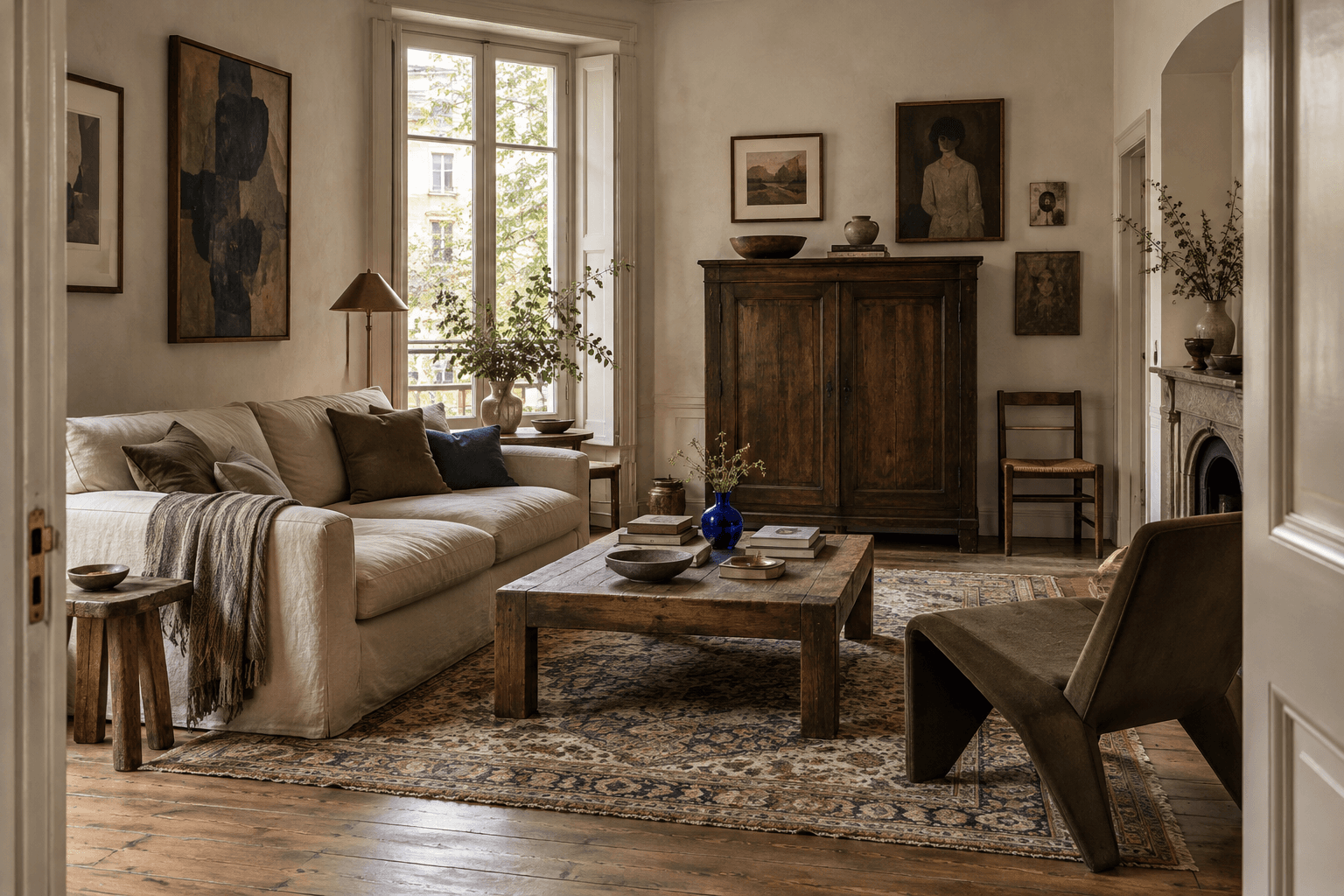
Selected pages · Founding edition
See how the book teaches taste.
Seventy-seven pages move between cinematic room studies, close visual readings, original frameworks, and working pages. These are real pages from the finished edition.
- 77
- pages
- 12
- room studies
- 09
- diagrams
- 13
- worksheets
The object
An interior book, not a downloadable handout.
The finished edition opens like a monograph: a visual proposition first, then a precise argument the reader can carry into their own room.
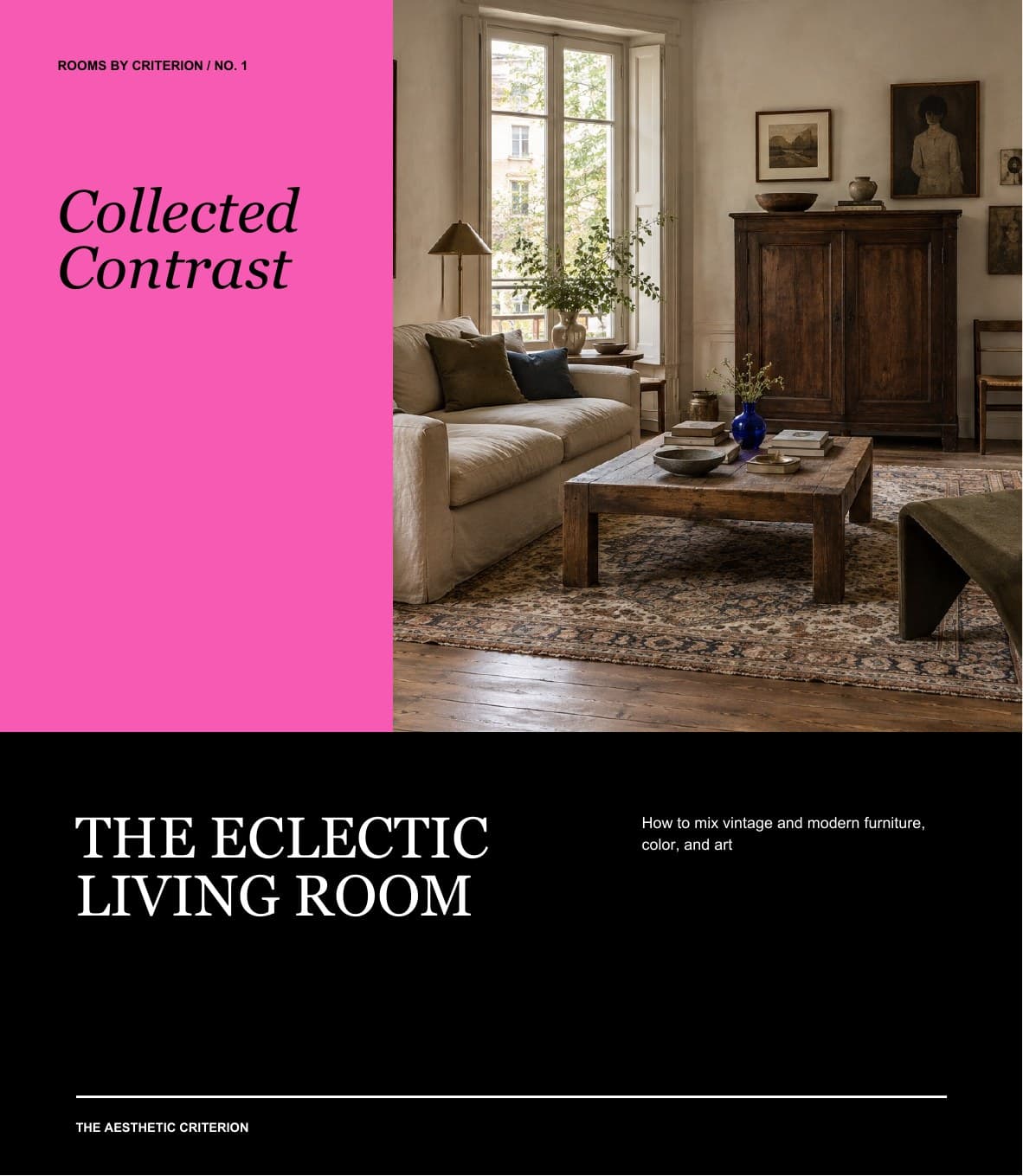
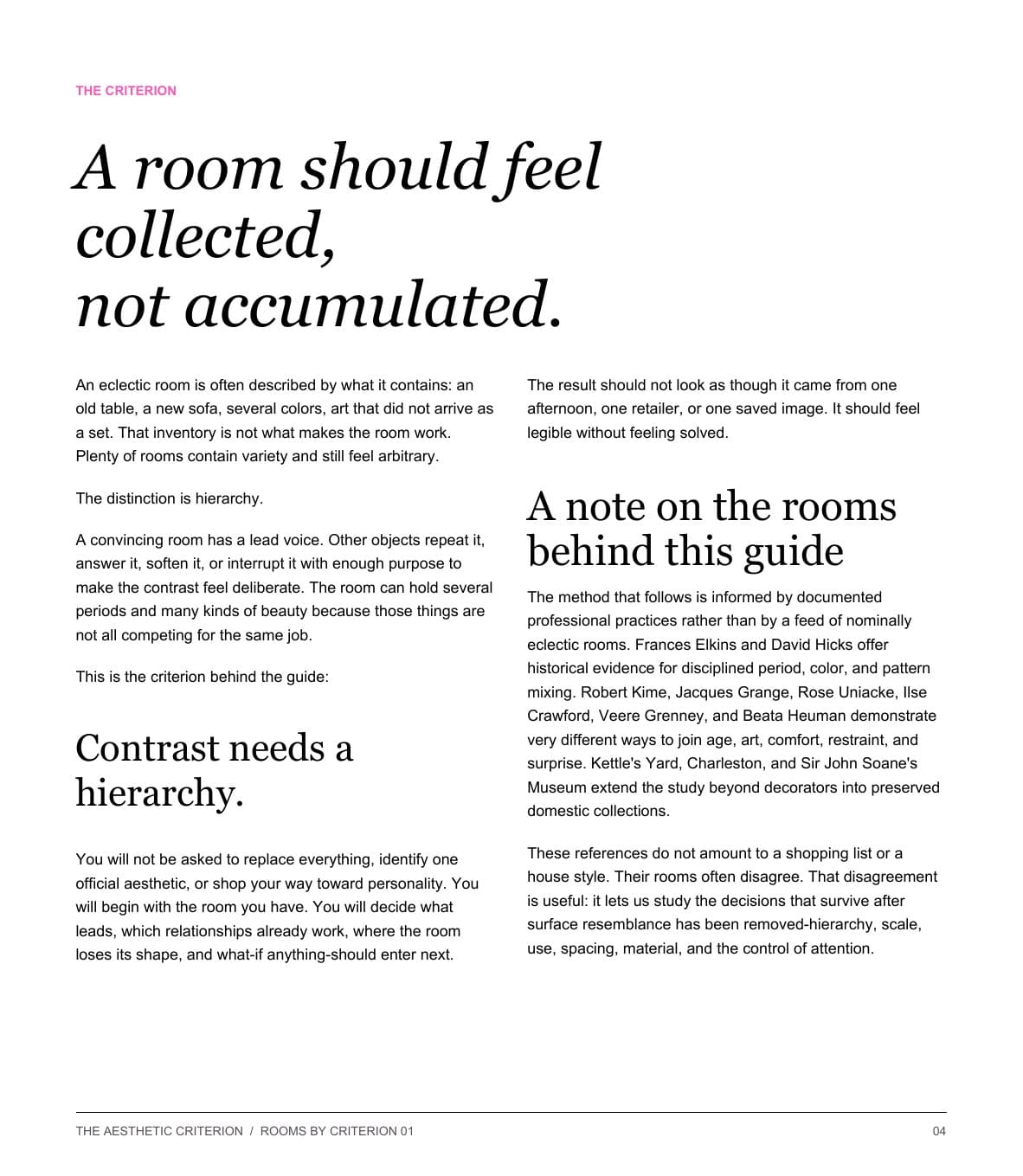
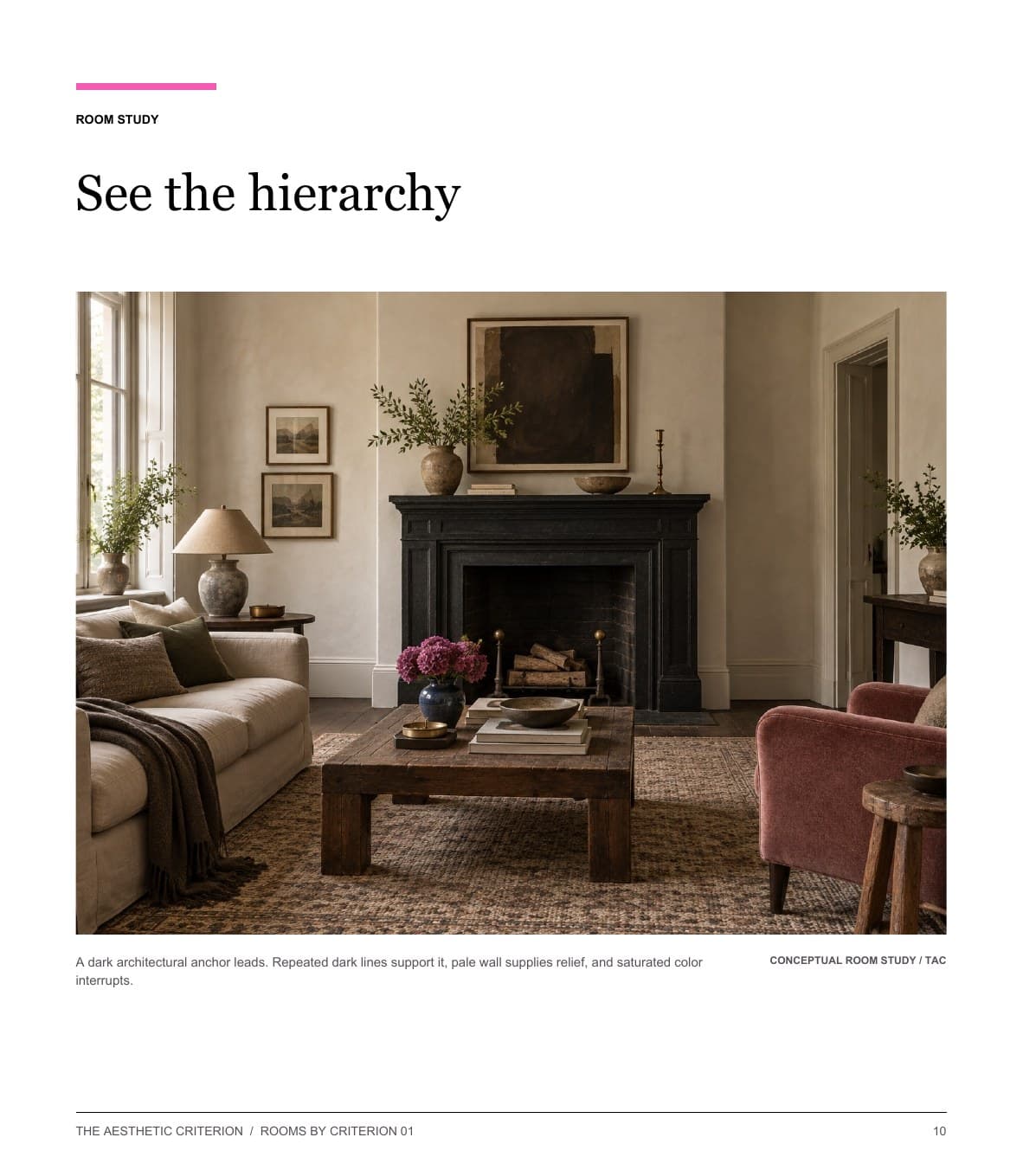
Look, then read
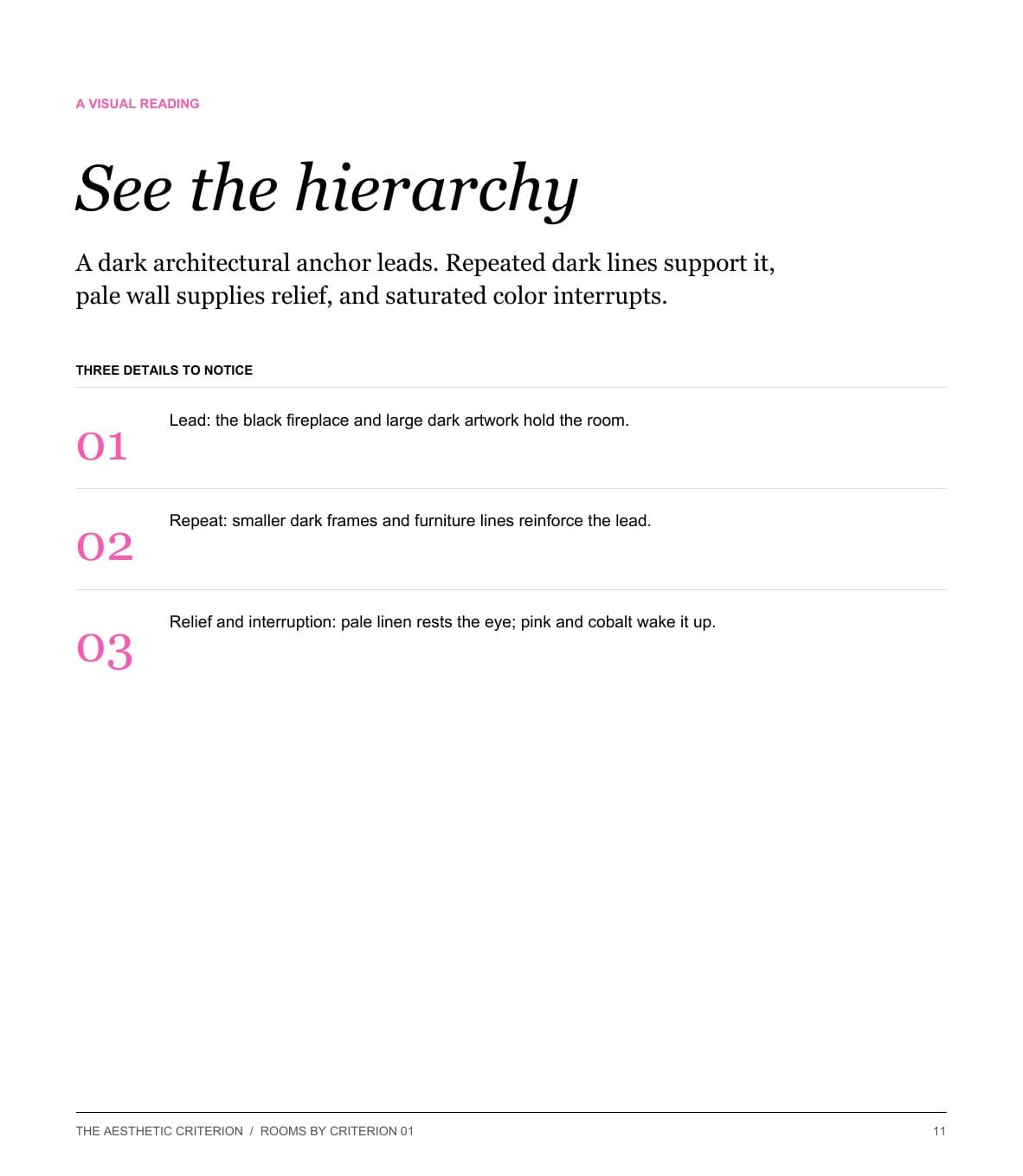
Room studies teach the eye what to notice.
A full-page interior is followed by a visual reading that names the lead, the repetitions, the relief, and the interruption.
Method into practice
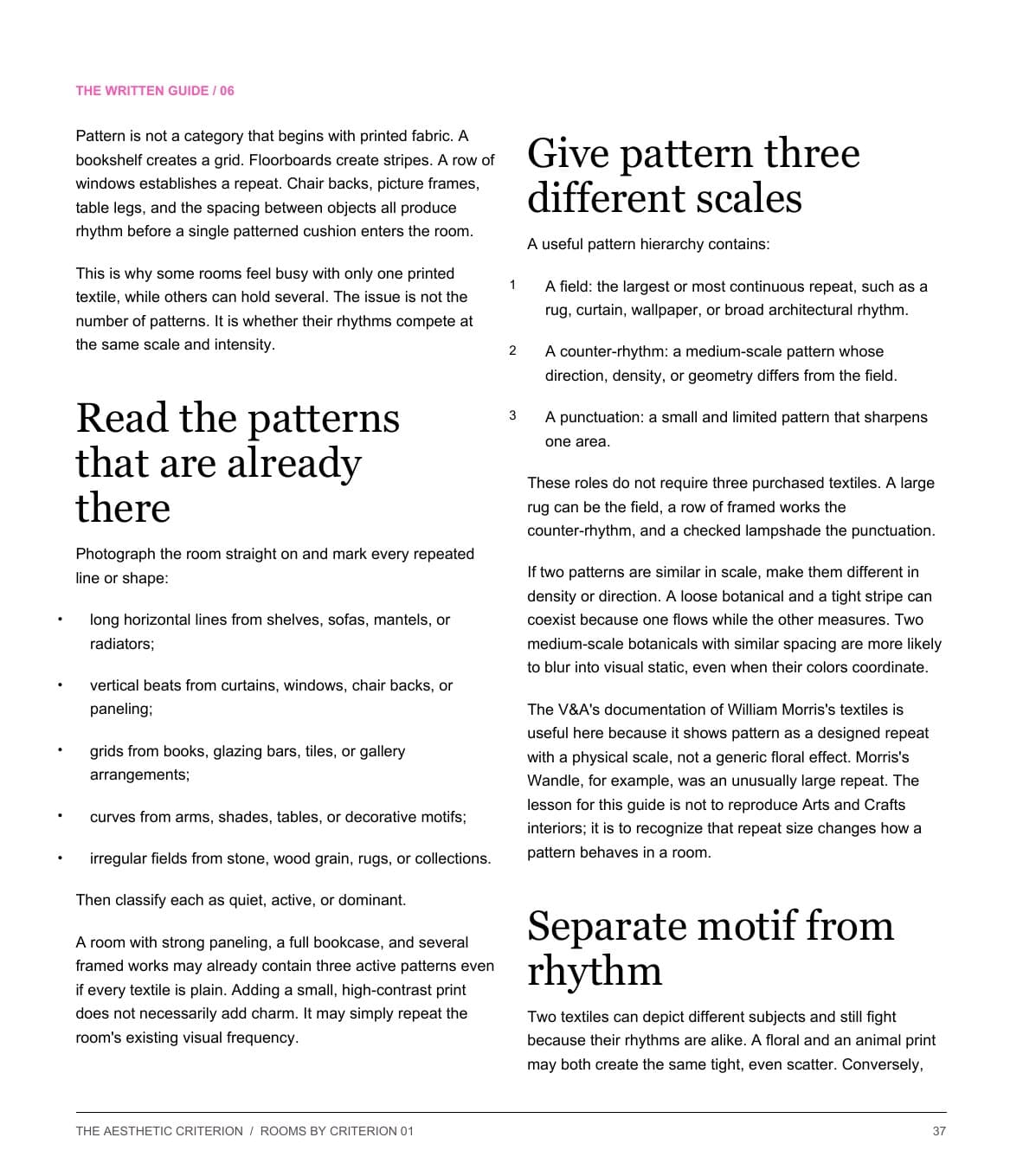
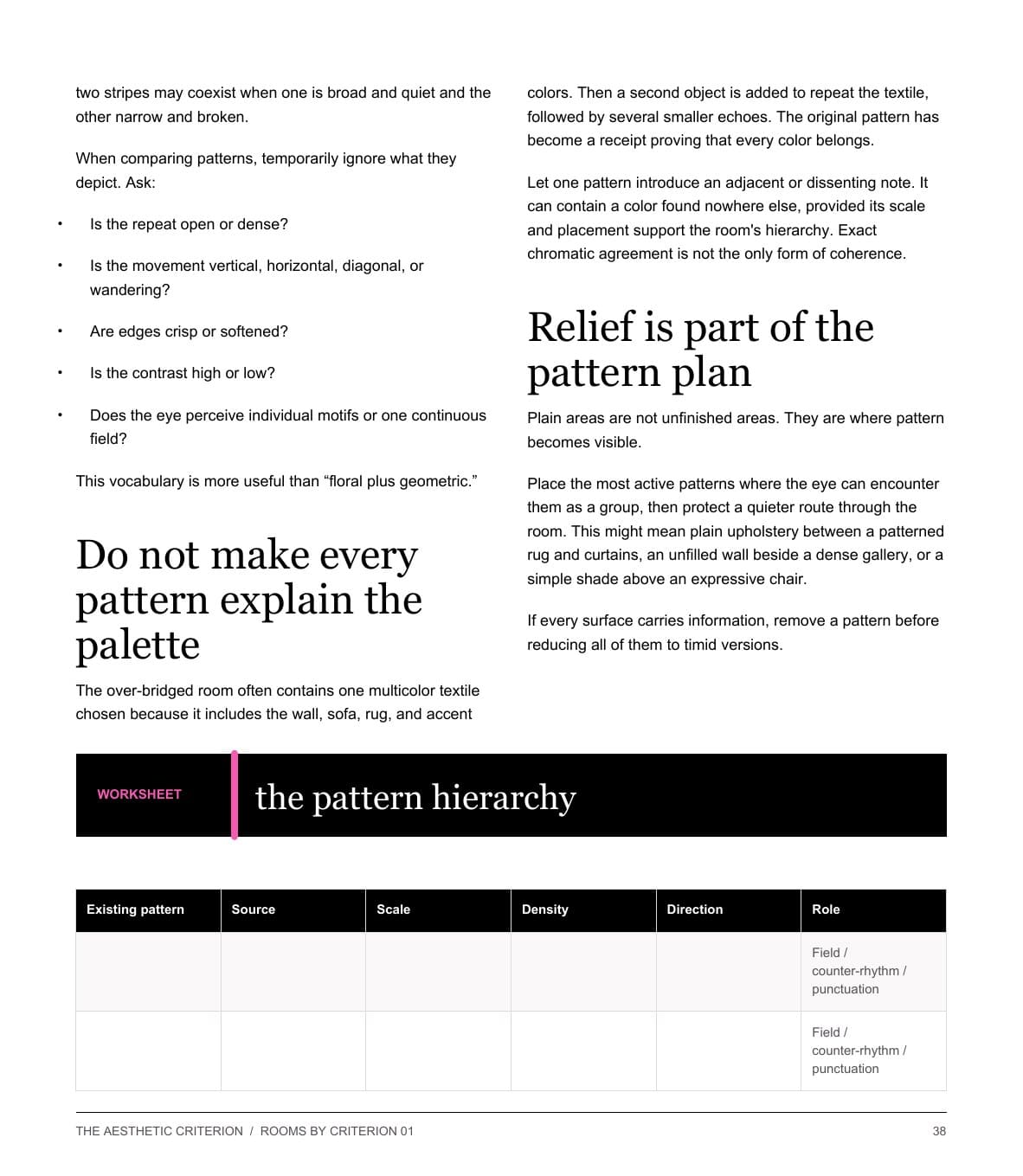
The argument becomes a working tool.
Editorial essays lead directly into worksheets, so the reader moves from understanding a principle to diagnosing their own space.
A repeatable decision system
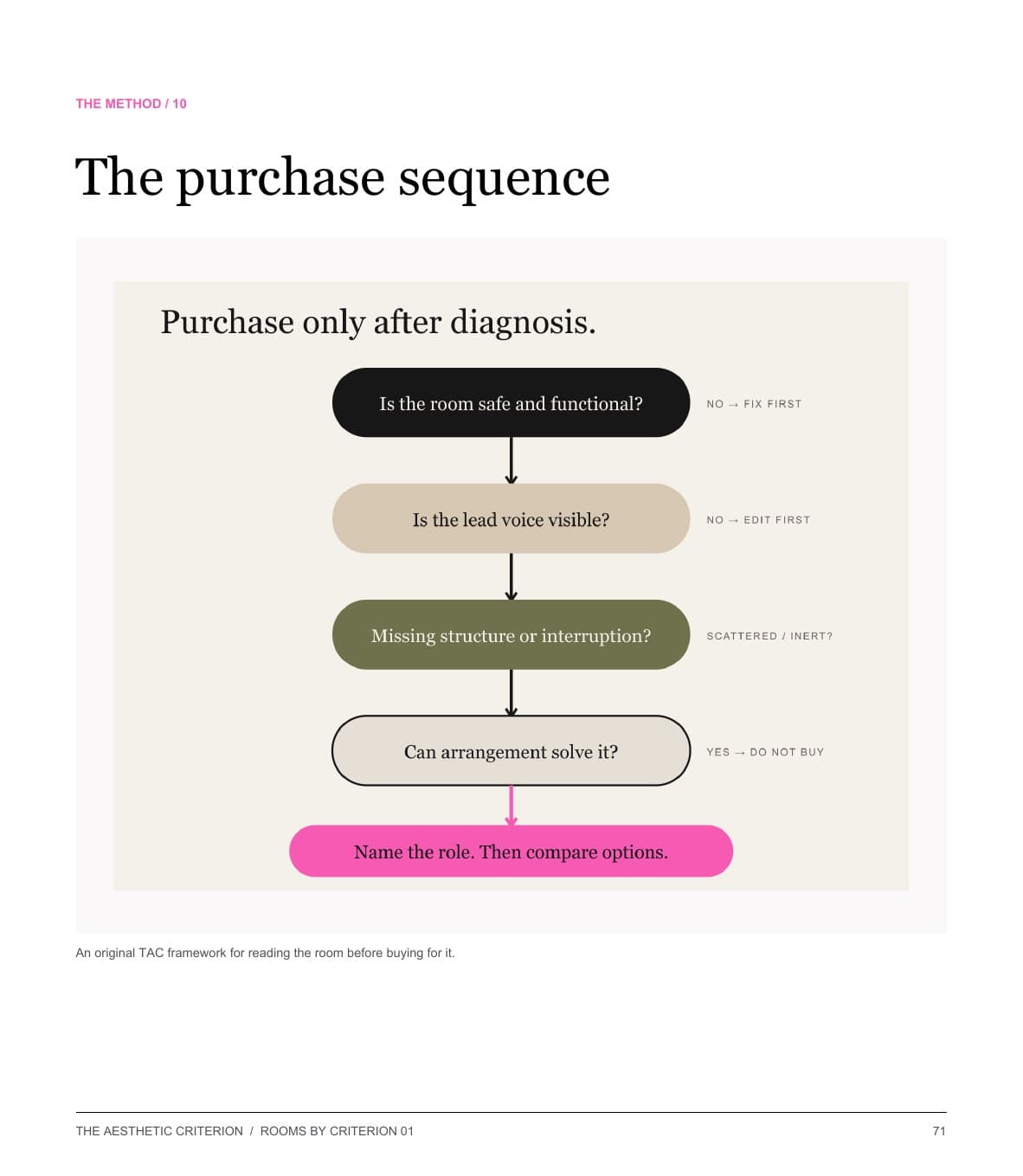
Diagnose before you buy.
Original frameworks turn taste into a sequence of decisions—ending with a purchase brief only when editing and rearranging are not enough.
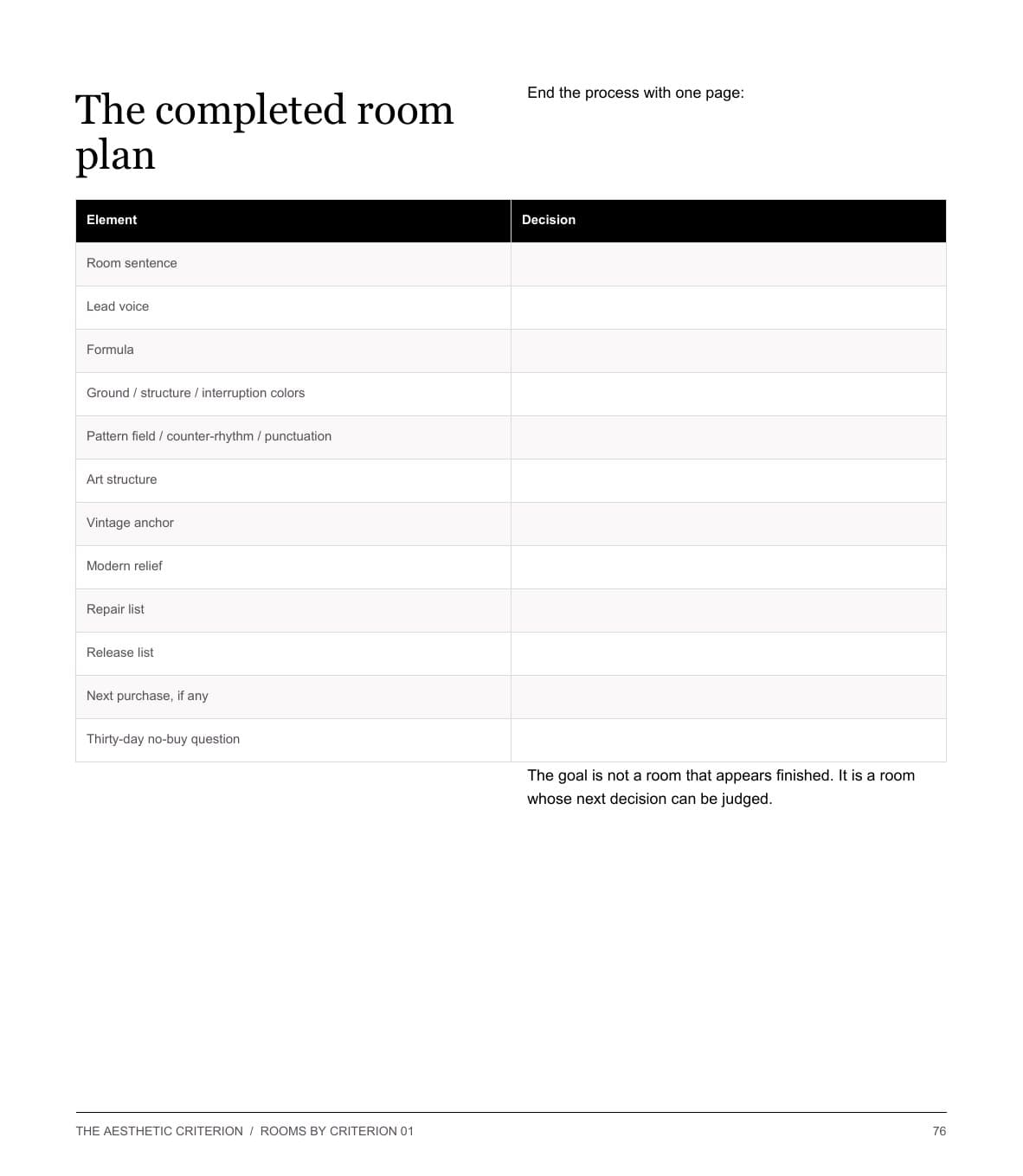
The complete founding edition is available now: the 77-page illustrated book, the printable worksheet deck, and the private web reading edition.
Buy the editionThe criterion
Contrast needs a hierarchy.
Contrast needs a hierarchy. One visual idea leads; everything else repeats it, answers it, or gives it useful relief.
Two studies from the method
Color · age · art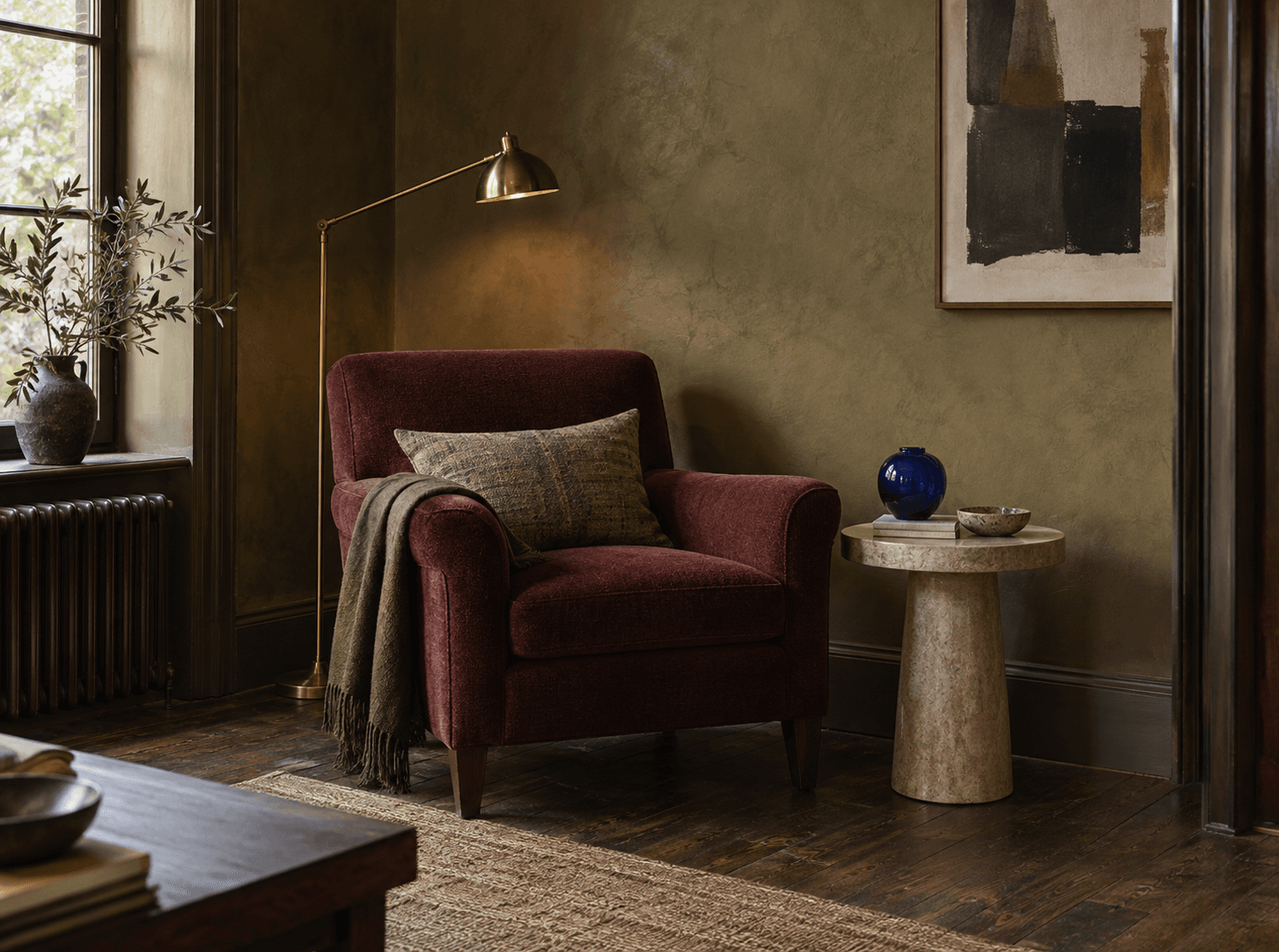
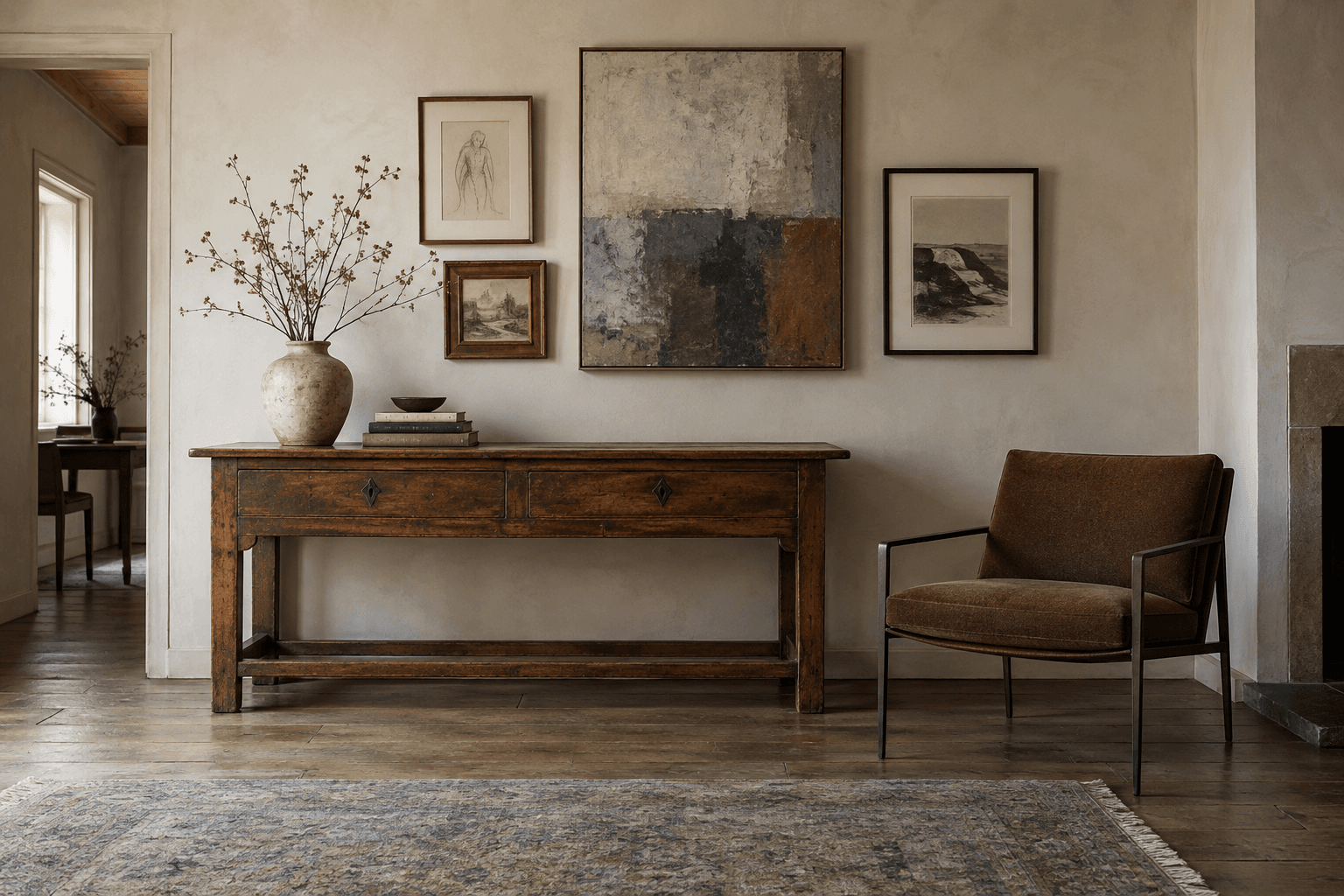
Inside the guide
Ten decisions, in order- 01
Read the room you already have
Begin with architecture, light, use, scale, and the pieces that must stay.
- 02
Choose the lead voice
Give the room one organizing idea before adding another object.
- 03
Build the old/new balance
Use roles and relationships—not an arbitrary vintage percentage.
- 04
Mix periods through relationships
Compare silhouette, line, material, finish, scale, and visual weight.
- 05
Use color with gravity
Create expression through hierarchy and repetition rather than theme.
- 06
Add pattern without static
Vary scale, density, and spacing so patterns have distinct jobs.
- 07
Let art organize the room
Treat art as a structural decision rather than a finishing touch.
- 08
Know what to buy vintage
Evaluate character alongside condition, safety, repair, and return risk.
- 09
Use three complete room formulas
Apply the criterion through quiet, old-world, and color-led approaches.
- 10
Put purchases in sequence
Finish with a plan—and a reason not to buy when the room needs editing.
Not another room to copy
Leave with a room plan.
The guide is built around choices the reader can make with the room and objects they already have. Shopping comes after diagnosis.
- Existing-room audit
- Keep, move, repair, release, and replace worksheet
- Old/new furniture relationship matrix
- Color repetition map
- Pattern scale checklist
- Vintage condition questions
- Art placement planner
- Budget allocation sheet
- Thirty-day purchase sequence
- Final “does this belong?” checklist
The complete edition
Three ways to use itIllustrated design-book pages
The full ten-chapter argument, twelve conceptual room studies, nine original diagrams, practical examples, and source notes.
Printable working sheets
A separate 14-page workbook for room audits, color and pattern maps, vintage risk, budget sequence, and the completed room plan.
Web reading edition
A responsive edition with chapter navigation and diagrams, held in the buyer’s TAC Library alongside the downloadable files.
A sample from the method
Begin with the room, not the reference image.
Your living room is not an abstract rectangle. It has a direction of light, a ceiling height, a floor that contributes color, a natural route through it, and objects that are staying. Those are not obstacles to the design. They are its starting conditions.
A convincing room has a lead voice. Other objects repeat it, answer it, soften it, or interrupt it.
Try three reversible changes before shopping
- Remove one object that repeats a job already being done.
- Move one object so it creates a relationship with an anchor.
- Change the distance between two pieces meant to converse.
Photograph the room after each change. Do not ask whether it is finished. Ask whether its structure is easier to read.
Rooms by Criterion · Founding edition
Keep the complete method close.
Purchase once and the full reading edition joins your private TAC Library, with the illustrated book and working sheets ready to download.
Buy for $29