Culture ·
A beautiful mark still deserves a closer look.
Wear, repair and damage can change the pleasure of an object, but its surface cannot supply a complete history on its own.
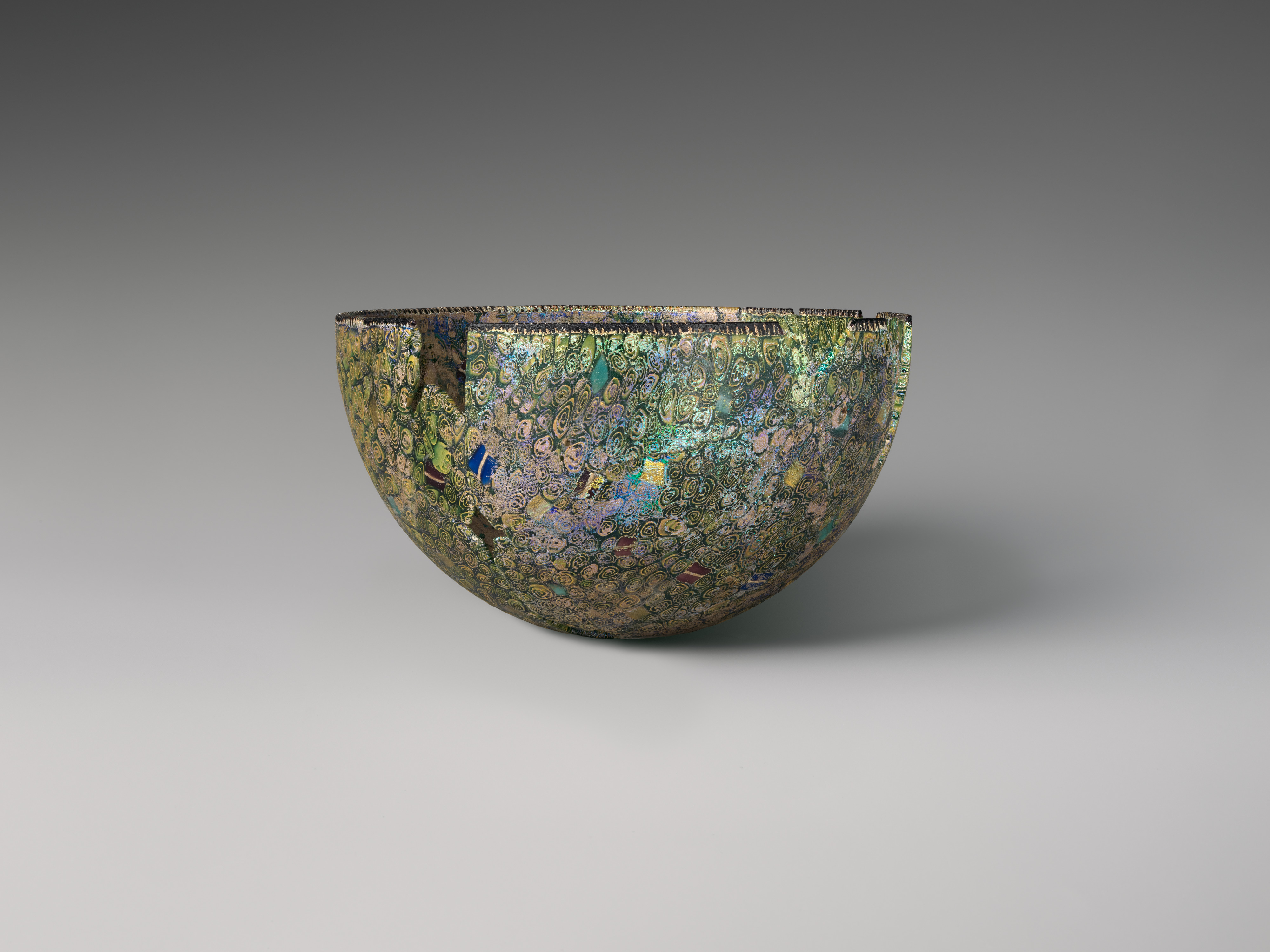
The small glass bowl in the Metropolitan Museum’s photograph catches the eye with an improbable mixture of blue, green and gold, interrupted by gaps that refuse to disappear. Tiny spirals run across its curved surface while a broken section interrupts the rim. The museum identifies this Greek mosaic gold-glass bowl as an early-second-century-BCE object and records repairs, losses and iridescent weathering. Its present appearance contains both deliberate pattern and subsequent change, which makes looking at it more interesting than choosing between the words beautiful and damaged.
It is tempting to give every appealing irregularity a reassuring story, especially when a seller has already suggested that age explains the price. A softened edge becomes evidence of devotion; a scratch acquires generations of family use. Sometimes a documented history supports that reading. Often the surface can tell us only that something happened, while the person, date and circumstances remain unknown. Enjoying the object does not require supplying the missing biography ourselves, and a good description should leave room for what nobody can establish.
Repair can change what an object allows us to see.
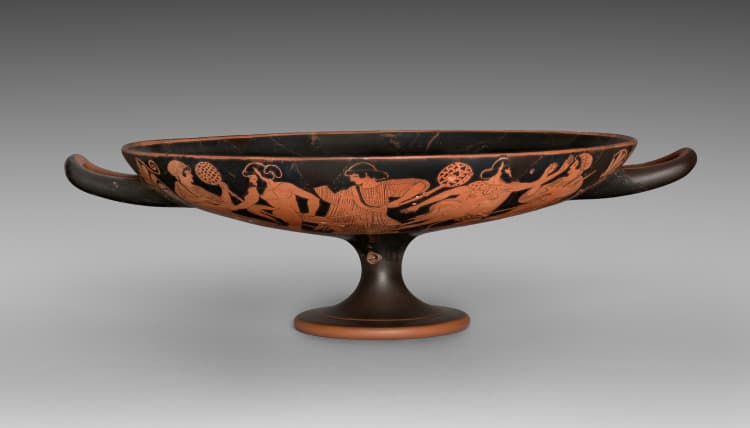
A Greek drinking cup in the Cleveland Museum of Art makes that uncertainty unusually visible, because its recorded repairs have changed how the vessel has been understood. The red-figure kylix, dated around 480 BCE, has been reconstructed from seventy-two fragments. Paired holes beside cracks once held ancient wire or clamp repairs, according to the museum. Other interventions concealed cracks and parts of the painted figures. These are particular actions recorded on one object, rather than a general promise that every broken antique carries an improving tale.
The cup’s later treatment also reveals how a repair can preserve an object while complicating the account that viewers receive of its original appearance. Cleveland describes cleaning and reconstruction in 1952–53, a subsequent change in proposed attribution, and more recent work replacing ancient fragments from another cup with modern reconstructions. The record does not pretend that survival has been a neat, uninterrupted process. Looking at the restored vessel with that information allows admiration to coexist with questions about which parts belong to its first making and which belong to later decisions.
That distinction is useful well beyond a museum, whenever a repaired object is offered for sale with a photograph that makes its joins difficult to see. Ask which parts are original, what has been added, and whether any treatment is documented. A discreet repair may be exactly what you want, but discretion should describe the appearance rather than the seller’s willingness to discuss it. A close photograph, a clear explanation and an honest gap in the record are more useful than an extravagant assurance that the piece has been lovingly restored.
A gold seam carries a particular history.
The gold repairs on a seventeenth-century tea bowl in the Smithsonian’s Freer collection make a different proposition, allowing the joins to participate in the appearance of the work. The collection record identifies stoneware with a clear, crackled glaze stained by ink, as well as gold-lacquer repairs. The stained surface is therefore part of the recorded description, not a licence to invent who drank from it. The bowl’s material details are already rich enough to sustain attention without imagining a particular household around it.
The Smithsonian’s account of the repair tradition explains that lacquer repairs were decorated with powdered gold and that the precise origins of kintsugi remain uncertain. That makes the bowl a more specific thing than a convenient illustration for every modern lesson about imperfection. Its repair belongs to a material practice and a cultural history. A contemporary object with a gold-coloured line may be pleasing in its own right, but the resemblance alone cannot establish its materials, method, age or suitability for use.
When considering a repaired ceramic for the table, ask what was used in the repair and whether the seller can substantiate the use you have in mind. A decorative object and a vessel intended for hot drinks raise different practical questions. If those answers are unavailable, there is still the option of enjoying the piece on a shelf, provided its condition makes that appropriate. Admiring a repair and asking what it can safely do are compatible responses to the same object.
Patina asks for a material-specific judgment.
The word “patina” can make almost any change in a surface sound desirable, although the practical question is whether that surface is stable or continuing to deteriorate. The Canadian Conservation Institute distinguishes inactive and active corrosion, including stable colour changes on metals and destructive corrosion that causes ongoing material loss. Its guidance identifies loose powder and flaking among warning signs, and explains that copper-alloy patinas can have varied colours. Green alone is therefore a poor diagnosis, however beautifully it complements the rest of a room.
This is where the pleasure of collecting benefits from a little restraint, particularly before polishing, stripping or applying a treatment recommended for an entirely different material. Identify what the object is made from and seek appropriate advice if its condition is uncertain, especially when it is valuable or fragile. A finish may be intentional, and a change you find unattractive may be part of what someone else values about the piece. The desire to make something look cleaner is understandable; the work should still begin with knowing what will be removed.
The same care can improve the way we see ordinary things already at home, even when their history extends no further than our own use of them. A ring left on a wooden table may bother you, while a handle polished by familiar hands may give pleasure. You do not have to admire both equally to take good care of the objects. You can decide whether a mark affects appearance, function or condition, then consider the appropriate response without turning every repair into a moral examination.
An object becomes more interesting when its description allows the eye to remain curious, distinguishing what can be observed from what can be documented and what is simply imagined. That leaves room for affection without asking affection to perform an assessment. Before replacing something because its surface has changed, look again at the form, colour and use that made you want it in the first place. Then ask what attention would help it remain worth living with, whether that means a careful repair, informed conservation or leaving a stable mark exactly where it is.