Culture ·
A print’s price is only the beginning of its cost.
The frame changes what you see, what you spend and how the work is supported, so it belongs in the first decision.
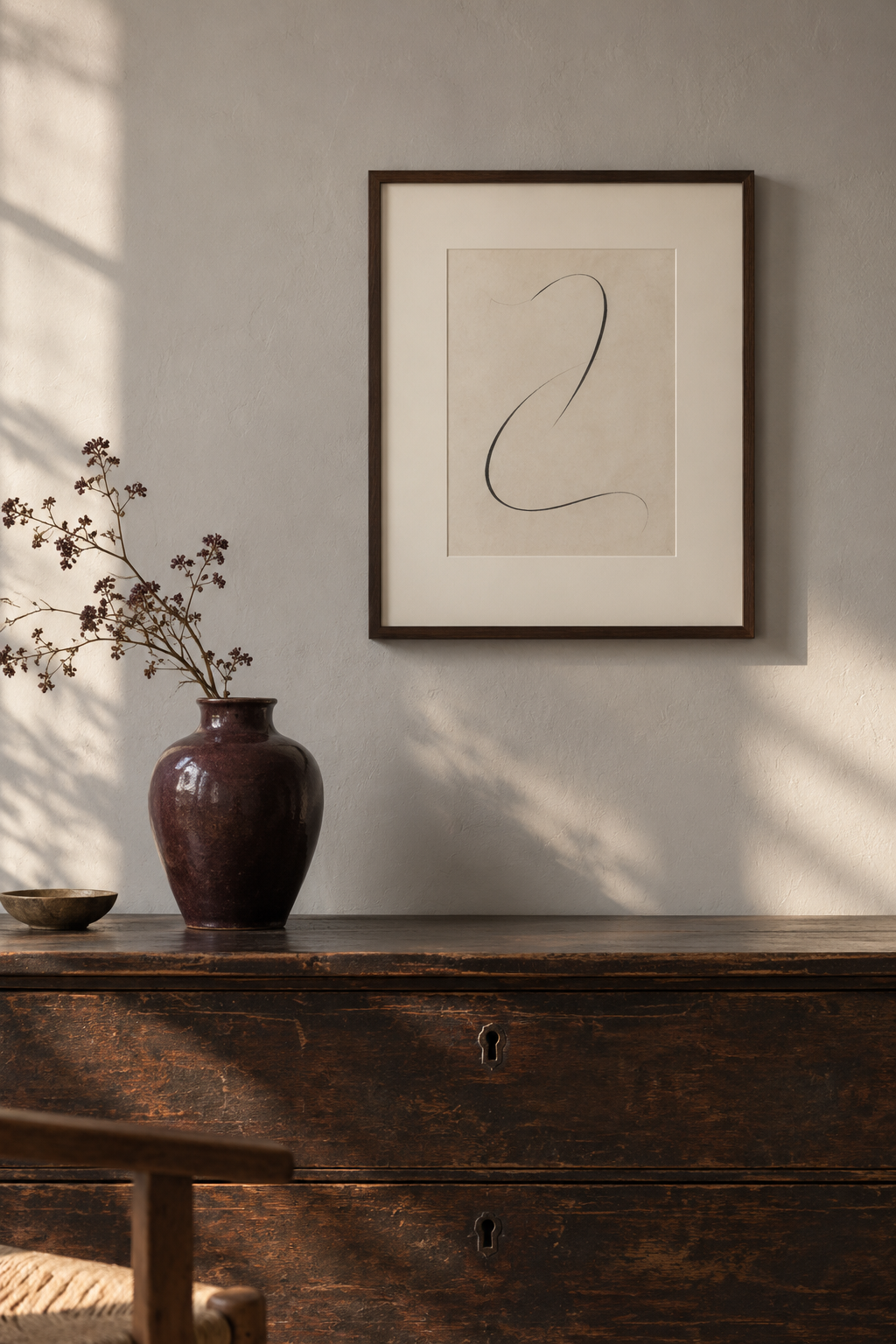
A small print can acquire an unexpectedly commanding presence once a broad mount and a frame have gathered around it, which is lovely until the measurements arrive. The sheet that seemed perfect for a narrow wall now competes with a light switch. Or the opposite happens: a ready-made frame fits the paper neatly but leaves the image looking marooned inside its existing white border. The most useful framing decision begins before choosing black, oak or a very persuasive shade of green.
There are three dimensions to establish before you order anything: the printed image, the complete sheet and the exterior size of the finished frame. They describe different things. Ask the seller which measurement appears in the listing, then ask the framer what will remain visible and how much wall the completed piece will occupy. A paper template of that final footprint is an inexpensive way to discover that a proposed arrangement needs editing. It also gives a small, quiet work a fair chance against the much louder photograph of someone else’s living room.
Three real prices reveal three different purchases.
For a replaceable poster measuring twelve by sixteen inches, IKEA’s white FISKBO frame was listed at $6.99 when checked on 14 October 2026. Its exterior measures thirteen and a half by seventeen and a quarter inches, and its front protection is polystyrene plastic. That is a clear, inexpensive proposition for someone willing to fit their own poster, without an identified conservation specification in the listing. The $6.99 buys the frame, not the poster, delivery, wall fixings or a professional assessment of the work. It would be an odd place to economise around an irreplaceable sheet.
For an existing work on paper, Framebridge’s pricing put the medium physical-art category, up to twelve by eighteen inches, at $150, with a further $10 mail-in fee. Its standard service lists a frame, acid-free mat, UV-protective acrylic, backing and hanging hardware. That gives a researched starting figure of $160 for framing an eleven-by-fourteen-inch piece, before any applicable tax, delivery charge or upgrade. The service suits someone who wants the fitting handled and accepts its available designs; it does not establish that every paper object is suitable for the standard package.
For a print and frame ordered together, Lou Haney’s *Rum Punch* at 20x200 offered a useful complete example on the same date. The fourteen-by-eleven-inch print was $85, with a black or white matted frame adding $215, for a $300 subtotal before tax and delivery. The listed exterior was seventeen and a quarter by twenty and a quarter inches. Framed orders ship only to US addresses, carry a stated two-to-four-week lead time and are final sale. The convenience is receiving one finished purchase; the limitation is committing to that configuration and its return terms.
Applying the Framebridge starting figure to the same $85 print produces a calculated $245 subtotal, compared with the publisher’s $300 framed option. That arithmetic is useful, but the two services have not become interchangeable because their dimensions and prices fit beside one another. Confirm the selected frame, mount opening, mounting method, delivery and any upgrades in each quote. The Aesthetic Criterion has researched these offers rather than ordered a comparative test, and neither subtotal includes every charge a particular buyer may face. A local framer’s itemised quotation could be the better comparison for a fragile or unusually shaped piece.
A reassuring label still needs a practical explanation.
The phrase “acid-free” sounds comfortingly complete, but a frame contains several materials and a method of attaching the work, all of which deserve attention. Ask what touches the paper, what holds it in place, and whether that attachment can be removed appropriately later. The Library of Congress’s matting guidance describes preservation approaches including suitable matboard, non-adhesive supports and particular conservation hinges. This is useful vocabulary for a conversation with a framer, rather than an invitation to improvise a treatment on a work you cannot replace.
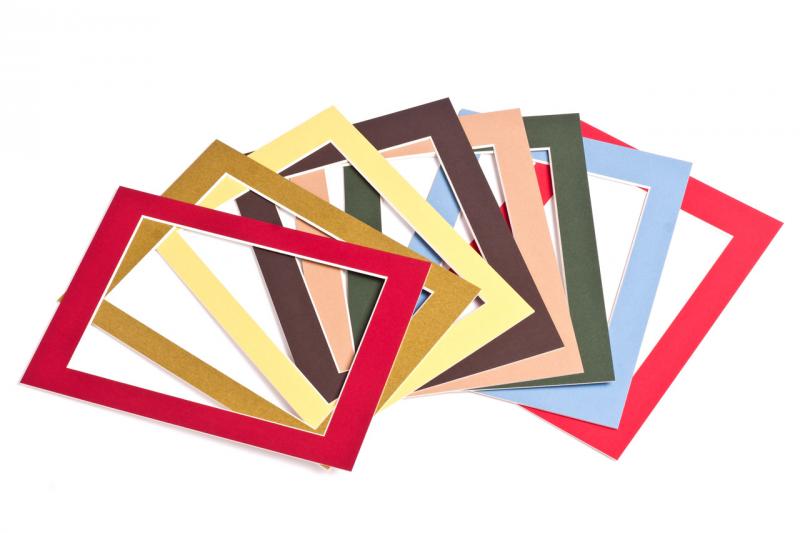
A window mount can give an image breathing room while helping to keep its surface away from the glazing, although a mount is not the only way to create that separation. Spacers can also do so when appropriate to the object and framing design. The US National Archives recommends keeping an original document from touching its glazing, along with limiting its exposure to light. If you prefer the visible edges of a floated sheet, ask how it will be supported and whether the chosen presentation suits its condition, instead of treating the appearance as the entire specification.
UV filtering addresses one part of light exposure, while the total amount of light and the length of time on display still matter to preservation. That is why an expensive glazing upgrade cannot turn a sunlit window into a sensible home for every print. Consider the actual position you can offer, including changes in daylight across the day. A beautiful purchase deserves that slightly unromantic inspection before it is assigned a permanent role over a radiator, beside a damp wall or in the brightest corner of the room.
The useful quote describes the work that will be done.
When comparing two framing quotes, ask each supplier to describe the complete construction and final dimensions, because otherwise you may be comparing two photographs of black borders. The account should identify the frame, glazing, mount or spacers, backing, attachment method and hanging arrangement, as well as any fitting, shipping or installation charges. Explain whether the sheet is replaceable, signed, already damaged or especially valuable to you. Those facts can change what advice is appropriate even when the print itself cost very little.
The practical terms matter just as much when a framer will hold the work or when a made-to-order purchase cannot be returned. Establish how it will travel, who arranges that transport, what happens if damage is discovered, and when the finished piece should arrive. If an old work has stains, tears or previous adhesive, ask whether it needs a paper conservator’s assessment before framing. A framing quote and a conservation treatment quote may address different work, so the distinction should be explicit before either begins.
The best-looking frame is the one you have chosen with the actual image and its eventual position in mind, after the construction and total price make sense. Sometimes that will be a modest ready-made frame around a replaceable poster; sometimes the mounting work will cost more than the print. Leave enough of the budget for the version you can live with now. A picture still rolled in its tube has not saved you the cost of framing; it has simply postponed the part of the purchase that lets you see it.