Fashion ·
Your everyday bag should make room for your actual day.
The opening, the straps and the contents tell you more about a useful purchase than the size name on the label.
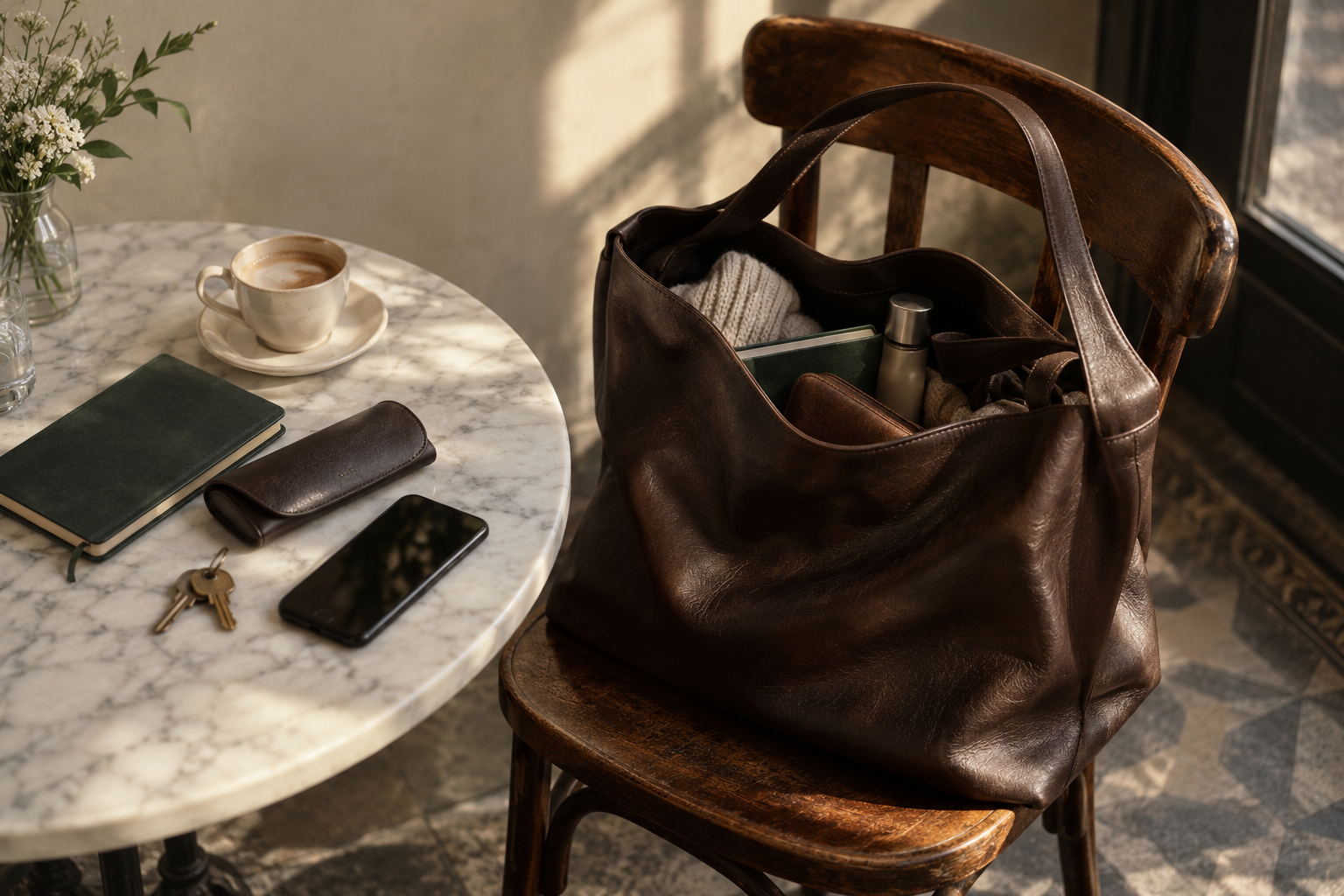
A bag can look wonderfully composed on a chair and become a small administrative crisis when the keys disappear beneath a book and a charger. The photograph rarely includes that part of the arrangement. Choosing well begins with the things that have to come along, and with how often you need to reach them. A beautiful silhouette earns its place when the ordinary day can happen inside it.
The useful distinction is between a bag for the day you regularly have and one bought to accommodate every possible version of it. A laptop twice a week, a water bottle every afternoon and a spare pair of shoes once a month are different demands. Making the occasional load the permanent standard can leave you carrying a larger bag than you enjoy. It can also obscure an easy answer: keep a separate tote for the exceptional day.
The contents should choose the size before the silhouette does.
The most revealing preparation is to empty the bag you already use onto a table and put back only what earned its journey yesterday. Include the case around the laptop, the pouch around the cosmetics and the umbrella in its sleeve. These are the shapes a new bag must accept. A device's screen measurement cannot tell you whether its corners will pass through a particular opening.
The way you move through the day should determine the next decision, because a shoulder handle and a crossbody strap solve different carrying problems. Someone who reaches for a transit card while holding a coffee may want a bag that stays against the body. Someone who repeatedly removes a laptop may prefer a more accessible tote. Neither arrangement proves comfortable from its measurements alone, so the shortlist below comes from published specifications rather than hands-on carrying tests.
A crescent makes sense when your day leaves the laptop behind.
The black BAGGU Medium Nylon Crescent Bag makes a persuasive everyday candidate when your regular load fits a curved, comparatively compact shape and you want adjustable carry. The current version specifies a 47-inch strap, a key leash and two interior pockets, with dimensions of 8 by 13¾ by 4 inches. Those pockets give the smaller essentials somewhere to belong; they do not turn the main compartment into a filing system. Its US list price was $56 on October 14, 2026.
The nylon construction is particularly worth considering if your existing bag spends too much time waiting for an elaborate cleaning routine you never perform. BAGGU's care guidance permits cold machine or hand washing of its heavyweight nylon products, followed by line drying. The empty weight was not stated in the product specifications checked, and usable opening width remains a question to verify in person. If rigid documents are part of every day, the shape needs a real packing check before you choose it.
A work tote needs a useful opening as much as useful volume.
The black Longchamp Le Pliage Original L tote is the candidate here for someone who wants a shoulder tote with a zipped opening and relatively simple organization. The listed base measures 12.2 inches across, with an 11.8-inch height and 7.5-inch depth; the handles have a 9.8-inch drop. It combines coated recycled polyamide canvas with leather trim, an unlined interior and two flat pockets. The US price checked on October 14 was $180.
The maker's stated 13-inch laptop capacity gives you a starting point for comparison, although the exact device, its sleeve and the remaining contents still matter. A fit claim should never be read as evidence of protective padding. This is an appealing arrangement if you already have a sleeve and know where your small possessions live. A reader who wants every object separately held should price and weigh any additional organizer before deciding that the tote has solved the problem.
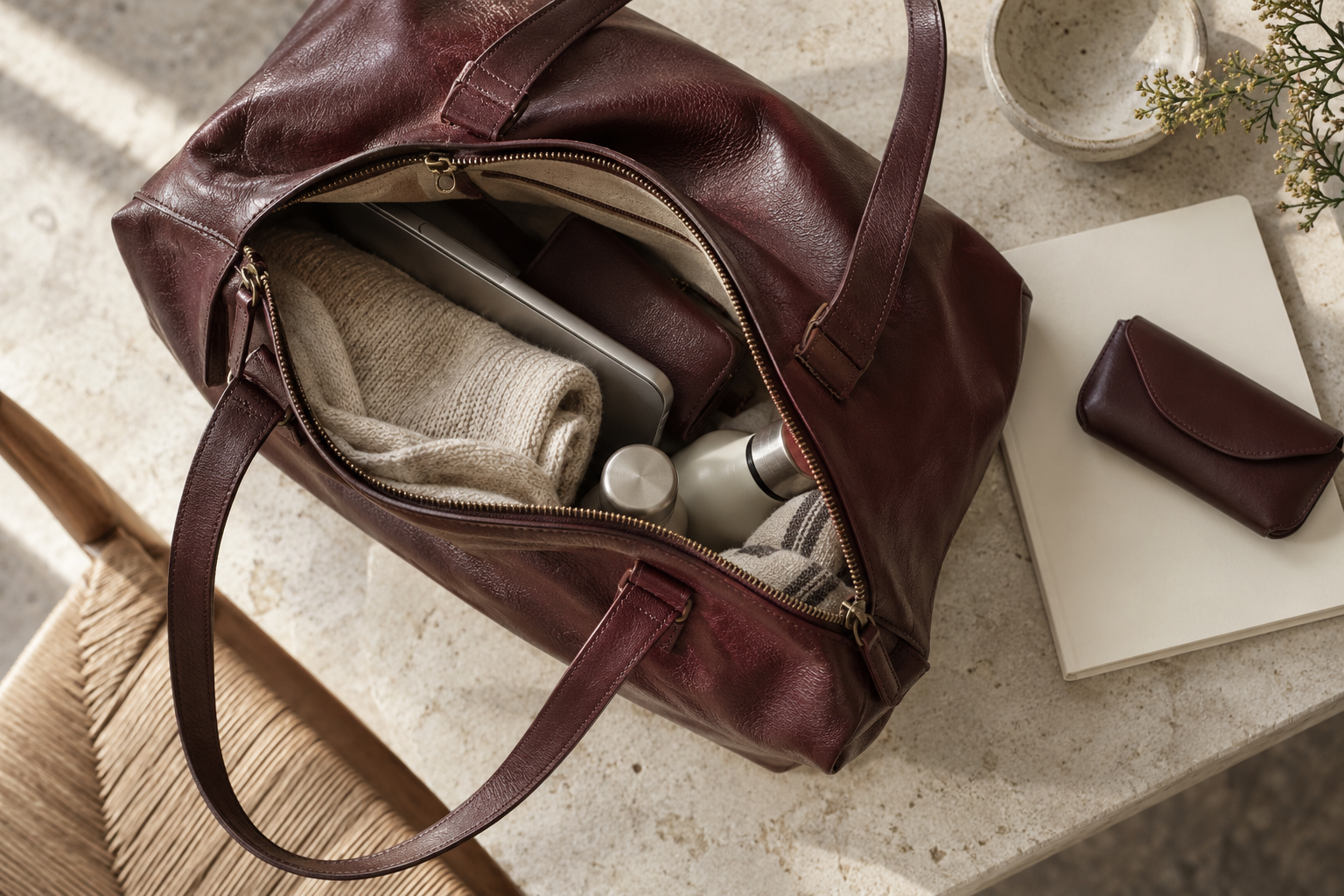
Modular organization becomes useful when you actually need the modules.
The black Cuyana System Tote 13-inch is worth considering when the attraction is a leather tote that can accept specific snap-in accessories as your routine changes. The bag measures 10 inches high, 13¼ inches wide and 5 inches deep, with a 9½-inch handle drop and a stated empty weight of 1.9 pounds. Its published specification identifies pebbled leather inside and out. That starting weight belongs in the decision before a laptop or another leather pouch arrives.
The price of a modular bag becomes meaningful only once you know which configuration you want, because the accessories shown around it are separate purchases. On October 14, the tote was $358, the adjustable strap was $98 and the matching 13-inch laptop sleeve was $118, making that combination $574 before applicable tax and delivery. Choose it because the particular arrangement serves you; a drawer of unused inserts would make an expensive answer to a question about organization. Confirm the opening and closure in the exact configuration you intend to order.
The return window belongs in the fitting process.
The sensible moment to decide whether a handle clears your winter coat is before the purchase becomes final, while a shop visit can answer the question cleanly. Bring the coat and ask whether a packing check is permitted. At home, preserve the tags and packaging, follow the seller's conditions and avoid treating the return period as a trial commute. A bag that only works with your thinnest shirt has not been assessed for the season in which you intend to carry it.
The BAGGU return policy allowed eligible full-price purchases within 30 days of purchase when checked, with a $4.95 fee on most refunded returns and exceptions for store returns, exchanges and credit. Longchamp's product-page policy specified eligible returns within 30 days of delivery, while Cuyana's policy counted 30 days from shipment and listed an $8 fee for mailed refunds. Read the terms for the actual seller and order; these dates and exclusions are part of the cost of choosing.
A useful everyday bag keeps your ordinary possessions accessible while letting its shape and closure become a familiar part of how you move through the day. Before buying, try removing the redundant pouch or giving the keys a consistent place in the bag you own. If a replacement still answers a specific inconvenience, choose the one whose proportions, carrying method and care you are willing to live with. The reward is a bag you reach for without negotiating with it.