Fashion ·
A scarf should earn the space it takes in your outfit.
Shape, dimensions and care help you choose between a silk square, a narrow cashmere scarf and a larger wool wrap.
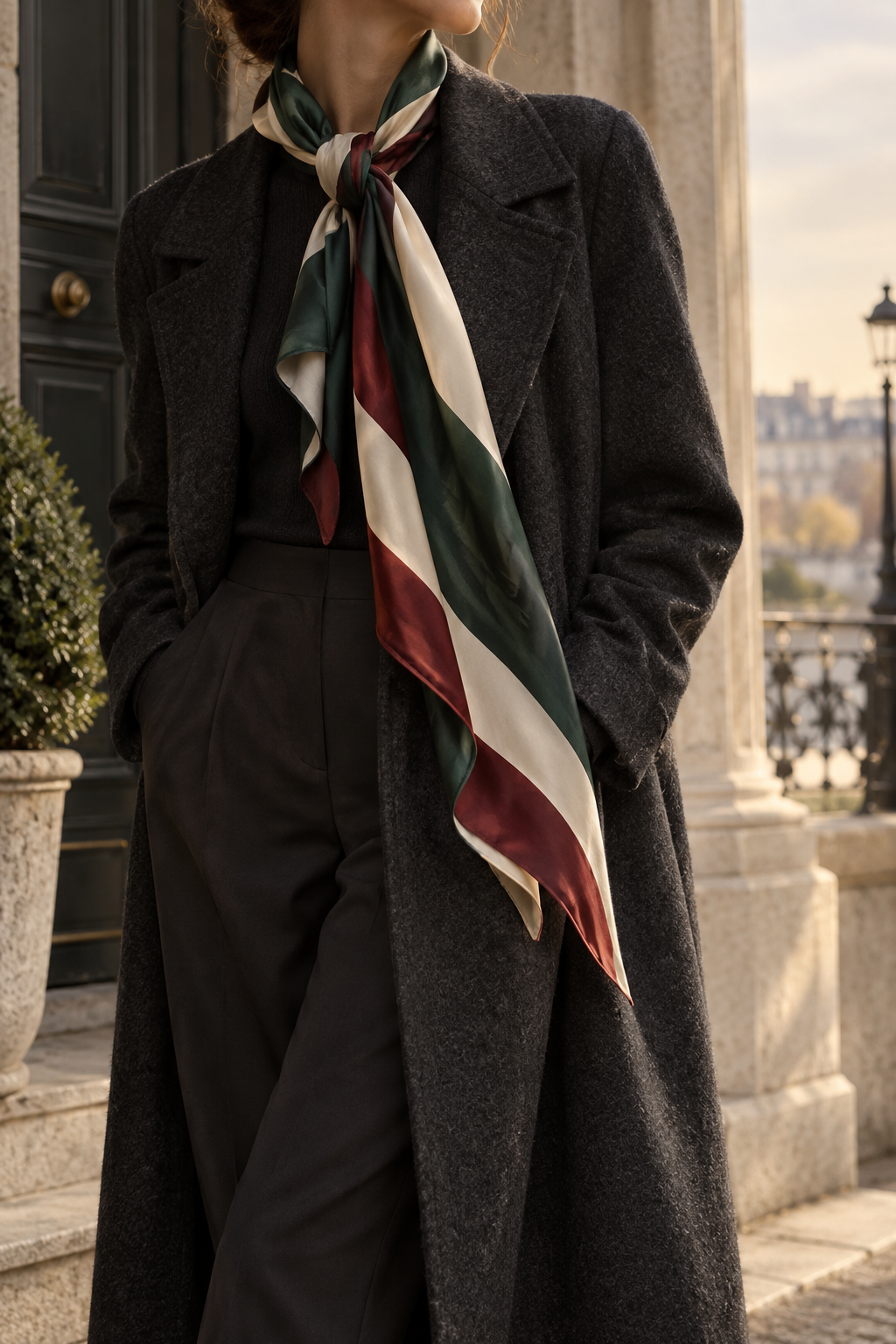
A scarf changes the part of an outfit nearest the face, which is a considerable amount of influence for something that can disappear into a drawer. It can place a sharp color above a dark sweater, interrupt the length of a coat or gather an otherwise generous silhouette at the neck. The satisfying purchase begins with that desired effect. Choosing a fiber before deciding what the scarf will do can leave you admiring an object you never quite know how to wear.
The scarf you already own is a useful measuring instrument, especially if you can name exactly what makes you reach for it or leave it behind. Perhaps its knot is too large beneath a coat collar, or the ends stop at a point you dislike. Perhaps you love the pattern while it lies flat and lose the part you liked once it is folded. These are specific problems, and they make the next choice clearer than a search for something described as timeless. This guide draws on brand specifications and care instructions rather than personal wear tests.
A square lets the fold decide how much pattern appears.
The Echo Menagerie 35-inch silk square in Cream is the most expressive candidate here for a reader who wants the scarf to contribute a visible pattern to familiar clothes. Echo specifies silk twill, a hand-rolled hem and a 35-by-35-inch square, with dry cleaning as the care instruction. The US price checked on October 14, 2026 was $179. The animal motif supplies the subject; the way you fold the square determines how much of that subject remains visible.
The attractive exercise is to compare a broad triangular fold with a narrower folded band while wearing the shirt or sweater you intend to keep. A triangle leaves a larger area available to the design, while repeated folding concentrates it into a smaller strip. Treat those as different compositions. If you want only a small mark of color at the collar, consider whether an existing smaller square already gives you that effect before paying for more fabric to hide inside the knot.
The material description tells you what this scarf is made from, but it cannot settle whether its knot will stay where you put it throughout your day. The useful checks are the finished fold, its relationship to the neckline and whether dry cleaning fits your habits. An animal disappearing into the fold can be part of the pleasure, provided you like the small area that remains. For winter coverage, decide whether the drawing or the amount of fabric is doing the choosing.
A narrow rectangle gives a coat a quieter line.
The Johnstons of Elgin Light Brown Cashmere Scarf offers a different proposition through its published 180-by-25-centimeter dimensions and restrained color, which the specification also names Otter Brown. The maker lists woven 100 percent cashmere, Scottish manufacture and dry cleaning, with a US price of $295 on October 14. Its relatively narrow shape is the reason for including it. The fiber label alone cannot establish how warm it will feel, how it will wear or whether your skin will welcome it.
The long rectangle is worth exploring when you want fabric to fall along the front of a coat without covering a large part of its shoulders. Start by arranging a scarf you already own to approximately the listed width and comparing the ends in a mirror. That exercise can reveal a proportion preference, even though a different cloth will not reproduce this model's drape. The published length does not specify how fringe is counted, so confirm that detail if the endpoint matters to you.
The cashmere scarf earns its place only if you want the shape and color enough to accept the cost and the stated care routine. A less expensive scarf already in the wardrobe may perform the same visual task. The appeal of a narrow brown rectangle is that it gives the coat another line without asking the whole outfit to become about the scarf. That is a perfectly good ambition for an accessory, especially when a collar or an earring already has your attention.
A wider scarf needs room to become part of the silhouette.
The TBCo Lambswool Oversized Scarf in Fig Gingham suits the reader who wants the accessory to occupy more of the outfit, with a check that can remain visible across a broader fold. The maker lists 100 percent lambswool and dimensions of 50 by 200 centimeters including fringe. At $125 on its US storefront on October 14, it costs less than the cashmere candidate while offering a wider format. That comparison concerns price and dimensions, not a ranking of quality.
The extra width offers more possibilities for a shoulder drape, but it also gives you more cloth to accommodate around a collar or beneath a bag strap. Try the idea with the outerwear you actually wear. Someone who likes a sharply drawn lapel may prefer to preserve that line; someone who wants a generous scarf to become the main shape may welcome the interruption. The product's instructions specify hand washing and flat drying, which should be as familiar a consideration as the color.
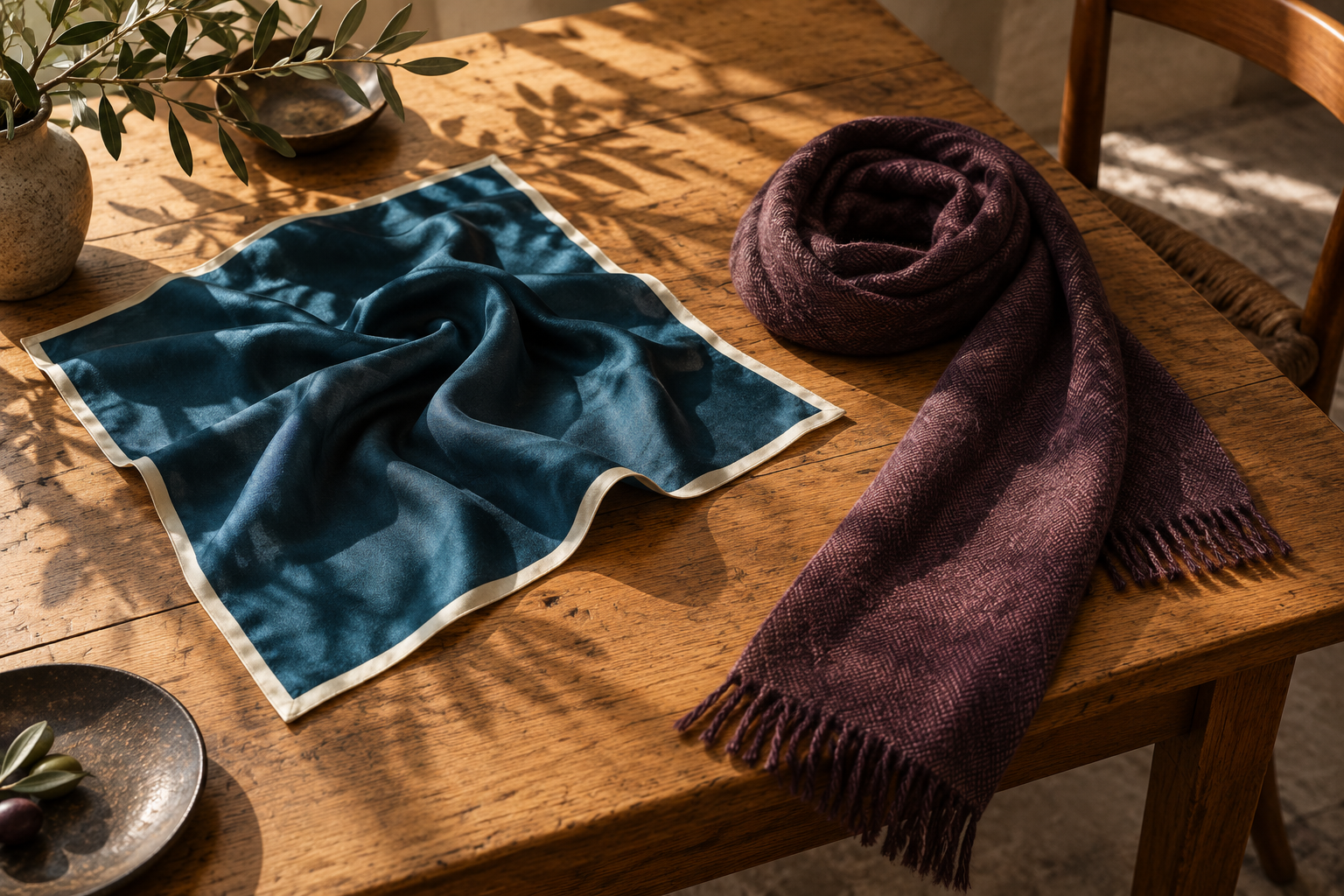
Care and skin contact deserve their own decisions.
The word on a fiber label can become a shortcut for imagined softness, although the actual scarf is something your neck will meet directly. If possible, handle the exact model and check it against your skin before purchase. Consider how much cloth will touch you and whether a shirt collar will sit between the scarf and your neck. A purchase for the feel of the fabric deserves that encounter; the most beautiful pattern will struggle to compensate for a sensation you dislike.
The seller's return terms for Echo, Johnstons of Elgin and TBCo also deserve a read before a scarf becomes a gift or receives embroidery. Their windows, start dates and exceptions differ, and international orders can have additional restrictions. A recipient needs a genuine opportunity to decide whether the fabric and proportions work. Leave personalization until that choice is secure rather than letting initials turn uncertainty into a permanent possession.
Choose the scarf whose shape changes the clothes you already wear in a way you can describe, enjoy and want to repeat. Put those clothes on, arrange an existing piece of fabric to test the approximate scale, then decide what remains missing. If the answer is a particular pattern, a longer line or a broader drape, you have a useful reason to shop. If the answer stays vague, the drawer may already contain a scarf waiting for a better fold.